Poonam Kaur’s Fresh Attack on Trivikram Sparks Debate

Poonam Kaur Reignites an Old Controversy
The Telugu film industry once again found itself at the center of a heated discussion after Poonam Kaur comments on Trivikram Srinivas through a strongly worded social media post. The actress, who has previously accused the filmmaker of causing her emotional and professional distress, returned to the issue after a video featuring Trivikram resurfaced online. Her latest remarks have not only revived a long-standing dispute but have also reopened broader conversations about power, accountability, and silence within the entertainment industry.
The controversy resurfaced when a promotional clip from the re-release of the classic Telugu film Nuvvu Naaku Nachav began circulating widely. In the video, director Trivikram Srinivas spoke about values, dignity, and the philosophy behind meaningful cinema. While many praised his thoughts, Poonam Kaur viewed the speech differently and responded with sharp criticism.
Strong Allegations and Public Outbursts
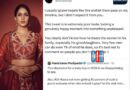
In her post on X dated December 30, 2025, Poonam did not hold back. She accused Trivikram of being emotionally abusive toward women and claimed that he escaped consequences due to continued support from influential sections of the industry. According to her, this unchecked protection has allowed harmful behavior to persist without accountability.
When Poonam Kaur comments on Trivikram, her criticism extends beyond the individual. She also questioned the role of media organizations and industry bodies, suggesting that their silence indirectly enables such situations. Her message emphasized that when powerful figures are not questioned, victims are often left unheard and isolated.
Questioning Industry Associations

Advertisement
A significant portion of Poonam’s criticism was directed at the Movie Artists Association, commonly known as MAA. She expressed disappointment that the association, which often responds swiftly to minor disputes, has not taken visible steps in addressing serious allegations involving women.
Poonam argued that selective intervention weakens trust in institutional justice. According to her, the absence of transparent inquiries discourages victims from speaking openly and reinforces fear within the industry. Her remarks reignited a long-standing debate on whether film associations are equipped—or willing—to handle sensitive complaints fairly.
A History of Repeated Claims
This is not the first time Poonam Kaur’s comments on Trivikram have drawn public attention. Over the past several years, she has consistently maintained that her career suffered due to his actions. She has previously stated that both her professional growth and personal well-being were deeply affected, leading to long-term consequences.
Her allegations have also extended to individuals associated with Trivikram, including actor-turned-politician Pawan Kalyan. These remarks have often sparked polarized reactions, with supporters praising her courage while critics question the timing and lack of formal legal proceedings.
Renewed Demands for Accountability
Poonam’s recent post coincided with earlier industry controversies, prompting her to demand a re-examination of her past complaints. She argued that justice should not be selective or influenced by popularity. According to her, genuine reform requires impartial investigation and moral responsibility from those in positions of authority.
When Poonam Kaur comments on Trivikram, she repeatedly emphasizes the emotional toll such experiences place on women. Her narrative focuses less on personal vendetta and more on systemic failure, urging the industry to introspect rather than dismiss uncomfortable voices.
Mixed Public Reactions Online
As expected, the response on social media was sharply divided. Many users applauded Poonam for speaking openly about issues that are often brushed aside in cinema circles. Supporters argued that her persistence highlights a deeper problem where women are discouraged from challenging powerful figures.
On the other hand, critics questioned why detailed evidence had not been presented through legal or journalistic channels. Some felt that repeated public posts without formal action weaken the seriousness of the claims. Despite differing opinions, the discussion itself underscored the discomfort surrounding accountability in creative industries.
Silence from the Accused
Notably, Trivikram Srinivas has not issued any official statement in response to the renewed accusations. His silence has been interpreted in multiple ways—by some as avoidance, by others as a choice not to engage in public disputes. Without a response, the controversy continues to rely heavily on public perception and online discourse.
The absence of clarification from industry bodies has further fueled speculation, leaving audiences to form their own conclusions. As long as official communication remains limited, debates around credibility and responsibility are likely to persist.
Poonam Kaur’s Current Path
Away from films, Poonam Kaur has taken a new direction in her public life. She recently joined the Bharatiya Janata Party, marking a shift from cinema to politics. Her move has added another dimension to the conversation, with observers debating whether her political involvement strengthens or complicates her claims.
Despite stepping back from acting, Poonam continues to use her platform to raise concerns she believes are unresolved. For her supporters, this consistency reflects resilience. For critics, it raises questions about motivation. Either way, her voice remains difficult to ignore.
An Ongoing Conversation
The moment Poonam Kaur comments on Trivikram, the industry is forced to revisit uncomfortable questions about power dynamics, gender sensitivity, and ethical responsibility. While the truth behind the allegations may remain contested, the broader issue they represent cannot be easily dismissed.
As audiences grow increasingly aware of behind-the-scenes realities, such discussions may shape how the industry responds to similar claims in the future. Whether this controversy leads to meaningful change or fades into silence remains to be seen, but its impact on public dialogue is undeniable.