Food Safety Authorities Explain Adulterated Jaggery Test
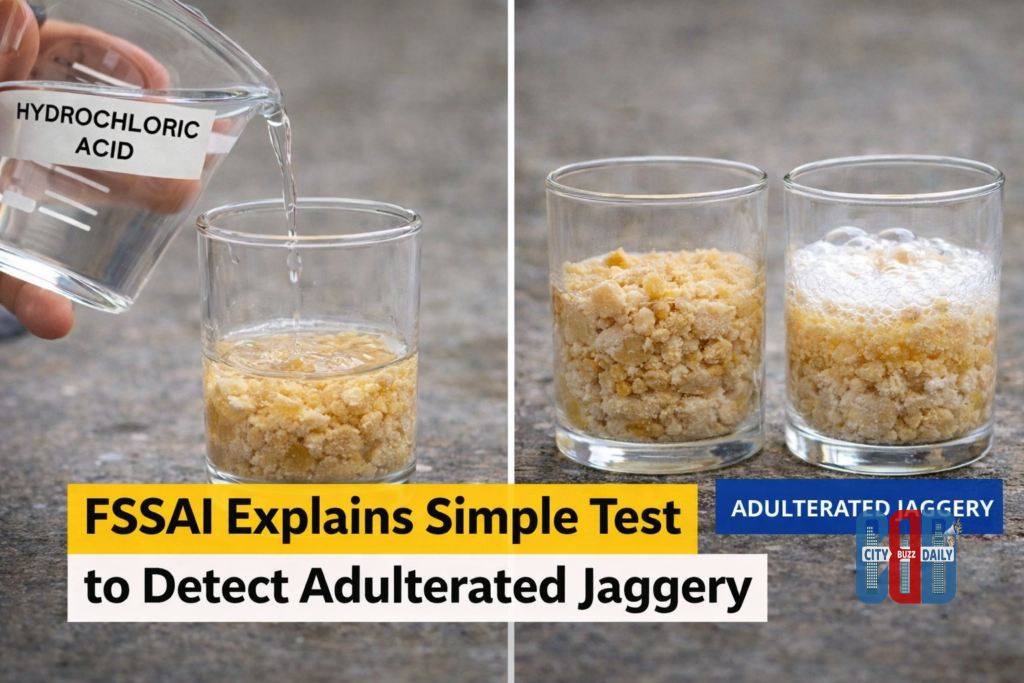
Food Safety Authorities Highlight Simple Test to Detect Adulterated Jaggery
Jaggery Widely Used in Daily Diet
Jaggery remains a common ingredient in many Indian households. It is widely used in preparing sweets, traditional beverages, and several Ayurvedic preparations. Many people also use jaggery as an alternative to refined sugar in daily consumption.
The ingredient is known for its role in supporting digestion, providing energy, and helping improve the body’s immunity. Because of these perceived benefits, the demand for jaggery has increased in recent years.
Concerns Over Adulteration in Jaggery
With growing consumption, concerns about adulteration in jaggery have also emerged. In some cases, substances such as sugar powder, chalk powder, and baking soda are reportedly mixed during production.
These additives can make jaggery appear brighter in colour and heavier in weight. The texture may also appear softer than natural jaggery, making it difficult for consumers to identify adulteration through appearance alone.

Advertisement
Adulterated jaggery may lose its natural nutritional value and could negatively affect digestion. The expected health benefits associated with jaggery consumption may also be reduced.
Simple Home Method to Check Quality
A basic home test can help consumers identify the presence of baking soda or similar additives in jaggery.
To conduct the test, a small portion of jaggery should be crushed into fine pieces. About a quarter teaspoon of this sample can be placed in a small glass container.
Approximately 3 ml of hydrochloric acid should then be added to the sample. The reaction must be observed carefully.
If no bubbles appear, the jaggery is likely to be pure. However, if bubbles form immediately, it may indicate the presence of adulterants.
Reaction Indicates Possible Baking Soda
The bubbling occurs when sodium bicarbonate (baking soda) present in adulterated jaggery reacts with hydrochloric acid. This chemical reaction releases carbon dioxide gas, which appears in the form of bubbles.
The presence of such a reaction suggests that the jaggery may not be natural.
Precautions While Buying Jaggery
Consumers are advised to check certain indicators before purchasing jaggery. The packet should display a valid FSSAI licence number, which confirms regulatory compliance.
Very bright or glossy jaggery should be avoided, as natural jaggery usually appears slightly brown or darker in colour. Buying from trusted brands or known vendors is also recommended.
Extremely low-priced jaggery should be examined carefully before purchase.
Complaint Mechanism for Food Adulteration
If consumers suspect adulteration in food products, complaints can be filed through the FSSAI online complaint portal, the FSSAI mobile application, or by approaching the local food safety department.
Food safety officials stress that consuming adulterated jaggery may lead to health risks. Careful verification while purchasing food items remains an important step in protecting public health.