Rohit Sharma’s Viral Warning to Fans
A viral moment that shifted the conversation
Indian cricket has witnessed countless viral moments driven by on-field brilliance, but this time, the spotlight turned to an uncomfortable off-field interaction. Rohit Sharma became the center of attention after a short video showed him firmly warning fans who crossed personal boundaries while attempting to take a selfie. The clip spread rapidly across social media platforms, sparking intense discussion not about runs or records, but about respect and responsibility.
The incident resonated widely because it highlighted a growing concern in modern sports culture. As access to public figures increases through smartphones and social media, the line between admiration and intrusion has become increasingly blurred. What unfolded in those few seconds inside a parked car reflected a much larger issue faced by athletes across the world.
What exactly happened during the selfie incident
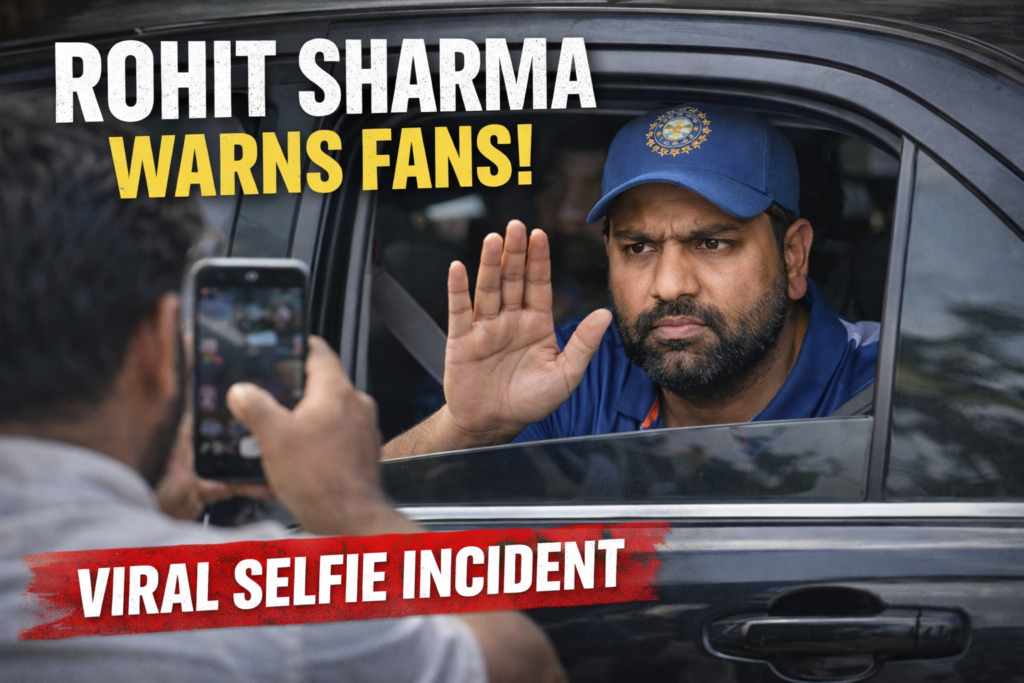
The moment occurred when Rohit Sharma was seated inside his car and acknowledged a group of fans standing nearby. Responding to their excitement, he extended his hand in greeting, a gesture that was initially met with enthusiasm. However, what followed quickly changed the tone. One fan grabbed his hand and attempted to pull his arm forcefully outside the car to capture a selfie.
Visibly uncomfortable with the sudden physical contact, Rohit immediately pulled back. Instead of reacting emotionally, he issued a stern verbal warning, making it clear that such behavior was unacceptable. He then rolled up the car window, signaling an end to the interaction. The clip ended there, but the discussion it triggered was only beginning.
Why the video struck a nerve online

Advertisement
The rapid spread of the footage revealed how deeply the issue resonated with fans and former players alike. While admiration for cricketers has always been a part of Indian sporting culture, many viewers felt that the incident showed how easily enthusiasm can turn into entitlement. The act of grabbing a player, regardless of intention, crossed an invisible but important line.
Social media reactions were largely supportive of Rohit Sharma. Many praised his calm yet firm response, pointing out that maintaining composure in such situations is not easy. The video also prompted discussions about player safety, particularly in public spaces where security presence is minimal and crowd control becomes difficult.
Leadership beyond runs and trophies
Rohit Sharma’s response was significant not because of anger, but because of restraint. He did not raise his voice unnecessarily or escalate the situation. Instead, his reaction conveyed authority, clarity, and self-respect. That approach reinforced why he is often seen as a leader beyond statistics.
Senior athletes carry influence that extends beyond the boundary rope. Their actions often shape public behavior, especially among younger fans. By drawing a clear boundary without resorting to aggression, Rohit sent a strong message that admiration should never override basic decency.
The larger issue of celebrity boundaries in modern sport
The viral selfie incident fits into a broader global pattern where public figures are increasingly expected to be constantly accessible. Smartphones, live videos, and instant sharing have transformed how fans interact with celebrities. While this closeness can strengthen connections, it also creates situations where personal space is ignored.
For athletes, especially those as recognizable as Rohit Sharma, public appearances can quickly become overwhelming. The incident served as a reminder that respect must remain central to fan culture. No photograph or video is worth compromising someone’s comfort or safety.
Cricket continues amid the viral noise
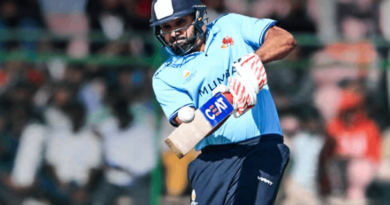
Away from the attention surrounding the video, Rohit Sharma’s cricketing journey has continued uninterrupted. He recently represented Mumbai in domestic competition, delivering a remarkable performance with the bat. A blistering knock of 155 runs showcased his enduring class, even though a subsequent match saw him dismissed cheaply.
Such contrasts are part of the sport’s unpredictable nature. Yet, they do little to diminish his standing in Indian cricket. His ability to switch focus from off-field distractions to on-field excellence remains one of his defining traits.
Looking ahead to international commitments
Rohit Sharma is set to lead India into an upcoming three-match ODI series against New Zealand, scheduled to begin on January 11. With recent international success still fresh in memory, expectations remain high. The series is seen as another step in India’s preparations for a packed international calendar.
Leadership will once again be under scrutiny, not just in terms of tactics and performance, but also in how the team handles pressure and public attention. Rohit’s calm demeanor, displayed both on and off the field, continues to be a stabilizing factor.
A landmark phase in Rohit Sharma’s career
The past year has been particularly significant in Rohit Sharma’s legacy. He crossed the 20,000-run mark in international cricket, a milestone achieved by only a select few. Leading India to an ICC Champions Trophy victory further strengthened his credentials as a successful captain.
He also climbed to the top of the ICC ODI batting rankings, achieving the number-one position for the first time in his career. In the process, he rewrote history by surpassing Shahid Afridi to become the highest six-hitter in ODI cricket. With 355 sixes across 279 matches, his impact on the format is undeniable.
Respect as the real takeaway
The viral video may fade from timelines, but the message it carried remains relevant. Angry Rohit Sharma warns fans was not about confrontation; it was about correction. It reminded audiences that admiration should be expressed with dignity and awareness.
In an era driven by instant content and viral moments, this incident stands out as a lesson rather than a controversy. It reinforces the idea that true fandom is rooted in respect, understanding, and responsible behavior. For Indian cricket, and for sports culture as a whole, that lesson could not be more timely.