India-Pakistan Tensions Rising Ahead of 2026
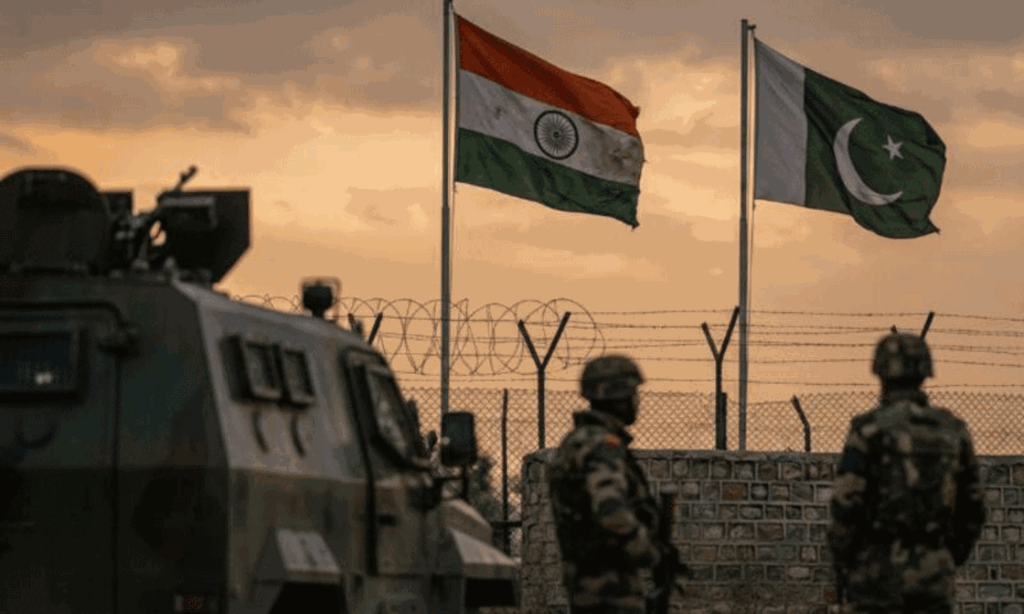
India-Pakistan Tensions 2026: Is a Major Conflict Approaching?
The discussion around India-Pakistan tensions in 2026 has intensified, with several developments causing global concern. While no country desires war, rising hostility, rapid military growth, and diplomatic friction have created an environment where conflict no longer feels impossible. The situation appears unstable, and the coming months could determine how the subcontinent moves forward. Analysts believe that if certain triggers align, a clash could occur, even if both nations attempt to avoid it.
Strategic Pressure After New Operations
Tensions began to rise after a series of strategic defense actions that changed the regional atmosphere. India’s evolving counter-terror strategy and border vigilance initiatives have created an impression that the country is unwilling to tolerate aggressive moves or proxy-based tactics anymore. On the other side, Pakistan’s political instability and security dilemmas have contributed to louder statements, defensive postures, and attempts to seek external support. The result is a landscape where stability appears fragile, and the question is no longer if the situation will change, but when.
Diplomatic Moves and International Influence
Diplomatic pressure has increased, especially after Pakistan engaged in new partnerships with foreign nations. Agreements promising mutual defense support have been interpreted as a way for Pakistan to signal strength against India. Many observers view these deals as more symbolic than practical, but they still create tension. Meanwhile, India has strengthened international ties and positioned itself as a rising power with growing influence in defense, technology, and global security discussions. These contrasting directions fuel the India-Pakistan tensions 2026 narrative, suggesting that diplomacy alone may not ease the strain.
Security Concerns and Cross-Border Threats
Winter months traditionally create heightened alertness in border regions. Intelligence reports warn that infiltration attempts often increase during cold seasons, particularly in snow-covered regions like Kashmir. With terrain offering natural cover and movement becoming harder to track, defense forces remain on constant watch. Authorities suggest that militant groups may see the current climate as a window for disruption. India continues to counter these concerns with focused anti-terror operations, advanced surveillance tools, and improved communication systems among security forces.
Expansion of Defense Capabilities

Advertisement
Both nations are rapidly upgrading their military assets. India has increased investment in advanced drones, precision missiles, guided weapon systems, and enhanced air defense frameworks. The purpose is not only to strengthen borders but also to ensure faster response times. Pakistan, meanwhile, has expanded defense cooperation with China and Turkey, importing new drones and air protection systems. The pace of upgrades on both sides adds to growing anxiety, as parallel rearmament historically indicates preparation for larger confrontations. This dynamic plays a central role in the India-Pakistan tensions of 2026 and the speculation surrounding the coming year.
The Risk of Escalation in 2026
Multiple foreign policy analysts have issued reports suggesting that 2026 could become a sensitive year. These assessments are based on past patterns, current alliances, internal political pressures, and unresolved border concerns. None of the reports confirms conflict as inevitable, but they highlight conditions that could trigger escalations. These include terror incidents, political miscalculations, international interference, or a sudden breakdown of communication channels. If any of these occur at the wrong time, retaliation may follow faster than diplomacy can intervene.
Domestic Pressure Within Both Nations
Internal politics also influence external decisions. In Pakistan, economic struggles and unstable leadership create a need to project strength, often resulting in louder statements or aggressive rhetoric. In India, public opinion strongly demands decisive responses to security issues, especially where terrorism is suspected. Such internal pressures on both sides increase the likelihood that a small incident could escalate into a larger confrontation. The population in both countries is emotionally connected to the issue, and that emotional weight has the power to complicate national decisions.
Current Situation and the Road Ahead
Right now, there is no official confirmation that a war will occur. However, the elements required to spark a conflict are developing. Border tension, international alignments, intelligence alerts, and military expansion form a chain of events that cannot be ignored. The responsible outcome, from a global perspective, would be dialogue and de-escalation. The unpredictable outcome would be a clash that neither side can control once it begins. The world has seen how quickly conflicts evolve in modern times, and technology has made every second crucial.
India-Pakistan Tensions in 2026 are not guaranteed to lead to war, but the indicators show a year that demands caution, patience, and strong decision-making. If diplomatic channels succeed, the region could stabilize and move toward cooperation. If they fail, the consequences may define the future of South Asian security. For now, the world watches carefully, and both nations hold the responsibility of choosing what direction history will take.