TIFFA scan services expanded in Bhadradri hospitals
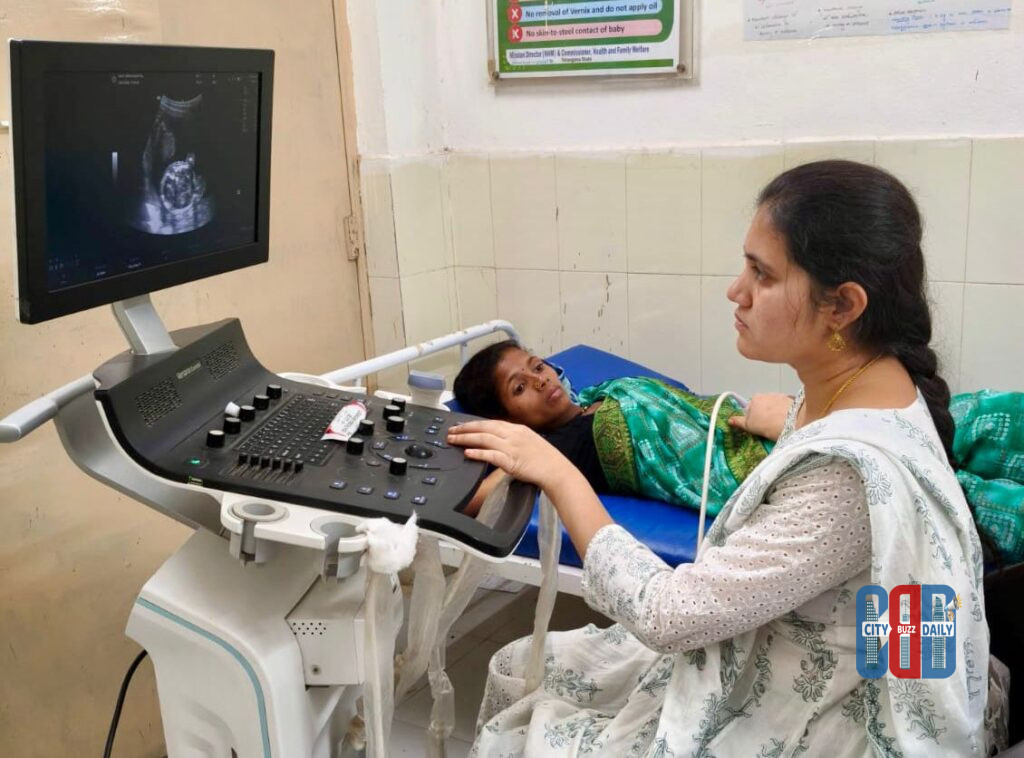
District administration enables TIFFA scan services across Bhadradri hospitals
Radiology services expanded in agency hospitals
Bhadradri Kothagudem district has expanded its public healthcare services by deploying radiologists across all agency hospitals. With this, advanced TIFFA (Targeted Imaging for Fetal Anomalies) scan facilities have been made available throughout the district.
Officials said this marks a key step in strengthening maternal and child healthcare services in remote and tribal areas.
Focus on maternal healthcare delivery
District authorities have been working in phases to improve access to quality healthcare in interior regions. Earlier, the appointment of obstetricians across major hospitals had already improved delivery-related services in agency areas.

Advertisement
As a result, there has been an increase in the number of deliveries, caesarean sections, tubectomies, and other maternal health procedures in government hospitals.
Addressing gaps in radiology services
TIFFA scan services were already available in hospitals at Bhadrachalam, Yellandu, Palvancha, and Manuguru. However, the absence of radiologists in Aswaraopeta and Cherla remained a challenge.
Efforts by former Collector Jitesh Patil and DCHS Dr. Ravi Babu ensured the procurement of TIFFA scanning equipment. Building on this, the current District Collector, Ankit, took steps to appoint a radiologist for Aswaraopeta and Cherla, closing the service gap.
Full coverage across six government hospitals
Officials noted that recruiting radiologists in rural and tribal areas is typically difficult. Despite this, the district administration managed to ensure full-fledged radiology services in all six government hospitals.
This development is being seen as a significant milestone in public healthcare delivery within the district.
Benefits for pregnant women in remote areas
The availability of TIFFA scans addresses a key gap in maternal healthcare services. Pregnant women can now access comprehensive diagnostic care within their local areas without travelling long distances.
TIFFA scans help in assessing fetal organ development and identifying abnormalities at an early stage. This supports timely medical decisions and improves safety for both mother and child.
Reduced travel burden and improved trust
Officials stated that the service will reduce travel time and costs for pregnant women, particularly those from poor and tribal communities. It is also expected to enhance confidence in government healthcare services.
DCHS Dr Ravi Babu said the initiative would significantly benefit underprivileged sections and strengthen the overall healthcare system in the district.