
Japan Government Secures Two-Thirds Lower House Majority
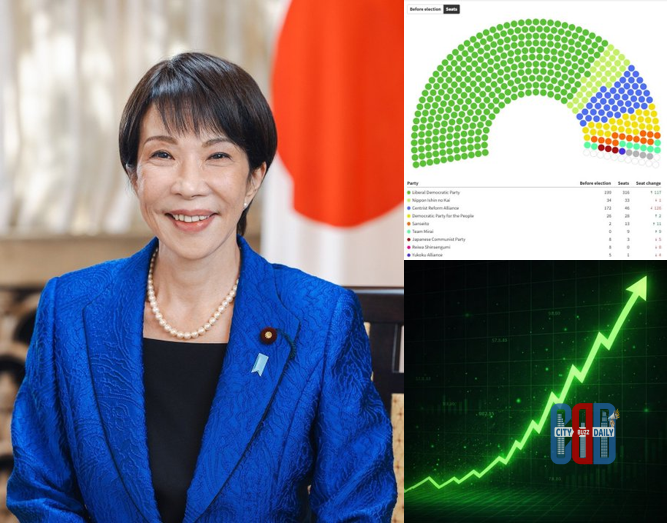
Japan Government Secures Two-Thirds Majority in Lower House Election
Ruling Coalition Wins Strong Mandate
Japan’s ruling coalition under Prime Minister Sanae Takaichi has secured a decisive victory in the Lower House election, winning a two-thirds supermajority. The outcome gives the government a strong parliamentary position and broad legislative control. The scale of the mandate marks one of the most significant electoral outcomes in recent political cycles in Japan.
The result consolidates the coalition’s authority and provides a stable framework for advancing key policy priorities. With a strengthened majority, the administration is positioned to move forward with its planned agenda in Parliament without major legislative resistance.
Policy Agenda Gains Momentum
The government’s policy focus includes immigration, national identity, economic restructuring, and its strategic approach toward China. With a two-thirds majority, the ruling bloc now has the numbers required to pursue legislative and structural measures connected to these areas.

Advertisement
Immigration and national identity have been central to the government’s political messaging. The administration has also outlined a financial reset agenda, indicating a broader approach toward economic management and fiscal direction. Policy direction concerning China remains another key element of the government’s strategic outlook.
The electoral result is expected to provide the political backing needed for advancing these initiatives through parliamentary procedures. The strengthened mandate reduces the likelihood of legislative gridlock and offers continuity in governance.
Market Reaction Reflects Investor Confidence
Financial markets responded positively to the election outcome. Japan’s benchmark stock index, the Nikkei 225, reached record highs following the result, registering a rise of around five percent. Market response reflected investor confidence in policy continuity and political stability.
The rally in equities indicates expectations of steady economic management and a predictable policy environment. Financial observers note that strong parliamentary backing often contributes to stable market sentiment, particularly when major policy direction remains consistent.
Administrative and Political Impact
The election outcome reinforces the ruling coalition’s capacity to govern with legislative strength. A two-thirds majority in the Lower House provides the administration with enhanced ability to shape policy, pass legislation, and manage political direction over the coming term.
The development is expected to influence both domestic governance and international positioning. Policy execution across immigration, economic restructuring, and strategic diplomacy will likely define the next phase of governance. Administrative coordination across ministries is anticipated as the government begins translating its electoral mandate into policy action.
Japan’s political and economic trajectory will now be shaped by how the administration utilises its parliamentary strength. The electoral outcome has provided the framework for decisive governance, with policy execution and institutional response set to follow.
👉 For more breaking news updates, in-depth reports, and real-time developments from across India, visit the City Buzz Daily homepage.