
Weather Forecast Signals Hotter Summer in Andhra Pradesh
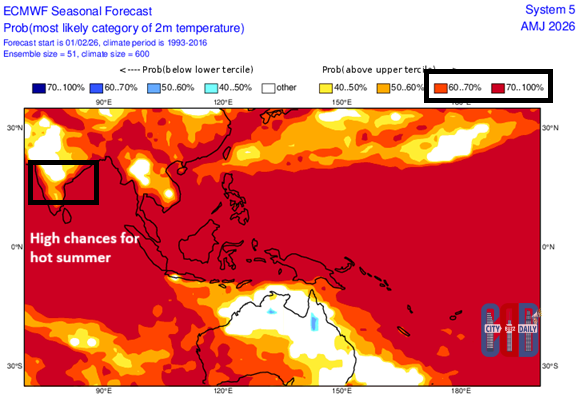
Forecast Signals the Possibility of Higher Summer Temperatures in Andhra Pradesh
Weather projections indicate a strong likelihood of a hotter-than-usual summer in Andhra Pradesh during 2026. The latest forecast issued by the European Centre for Medium-Range Weather Forecasts (ECMWF) points to an increased probability of above-normal temperatures across the state.
Meteorological assessments suggest that seasonal temperature patterns may remain on the higher side, raising concerns over prolonged heat conditions during the peak summer months. The forecast highlights the need for close monitoring of temperature trends in the coming period.
Possible El Niño Development and Temperature Impact

Advertisement
Climate indicators suggest that El Niño conditions may begin developing towards the end of summer. Historically, El Niño events have been associated with higher temperatures and reduced summer thunderstorm activity across several parts of India.
If the projected pattern materializes, parts of Andhra Pradesh could experience warmer conditions compared to seasonal averages. Reduced thunderstorm activity during summer may also influence local weather behavior, including limited cooling spells typically brought by pre-monsoon showers.
Historical Temperature Trends Linked to El Niño Years
Past temperature records show a pattern of intense summer heat in Andhra Pradesh during years associated with El Niño events. In Vijayawada, one of the highest recorded temperatures of 48.8°C was registered in May 2002, coinciding with the onset of El Niño conditions.
Similarly, the city recorded 48.7°C in May 2003 during the continuation of El Niño. Another high of 47.6°C was recorded in May 2015, again during an El Niño year. These records reflect the historical link between developing El Niño conditions and elevated summer temperatures in the region.
Monitoring Required as Summer Approaches
Weather observers continue to track evolving climate signals to assess the extent of heat conditions expected during the upcoming season. The developing forecast will be reviewed periodically as additional data becomes available.
The possibility of higher summer temperatures has placed attention on preparedness and weather monitoring, particularly in regions historically prone to intense heat. Further updates are expected as the season progresses and climate patterns become clearer.
👉 For more breaking news updates, in-depth reports, and real-time developments from across India, visit the City Buzz Daily homepage.