US weighs troop deployment options in Iran conflict
Trump administration weighs troop deployment as Iran conflict enters new phase
Reinforcement plans under active consideration
The administration of Donald Trump is examining options to deploy thousands of additional U.S. troops to the Middle East as the ongoing conflict with Iran moves into a possible new phase.
Officials and sources familiar with internal discussions indicated that these reinforcements are being evaluated to expand operational flexibility as the war enters its third week.
Strategic targets include Strait of Hormuz
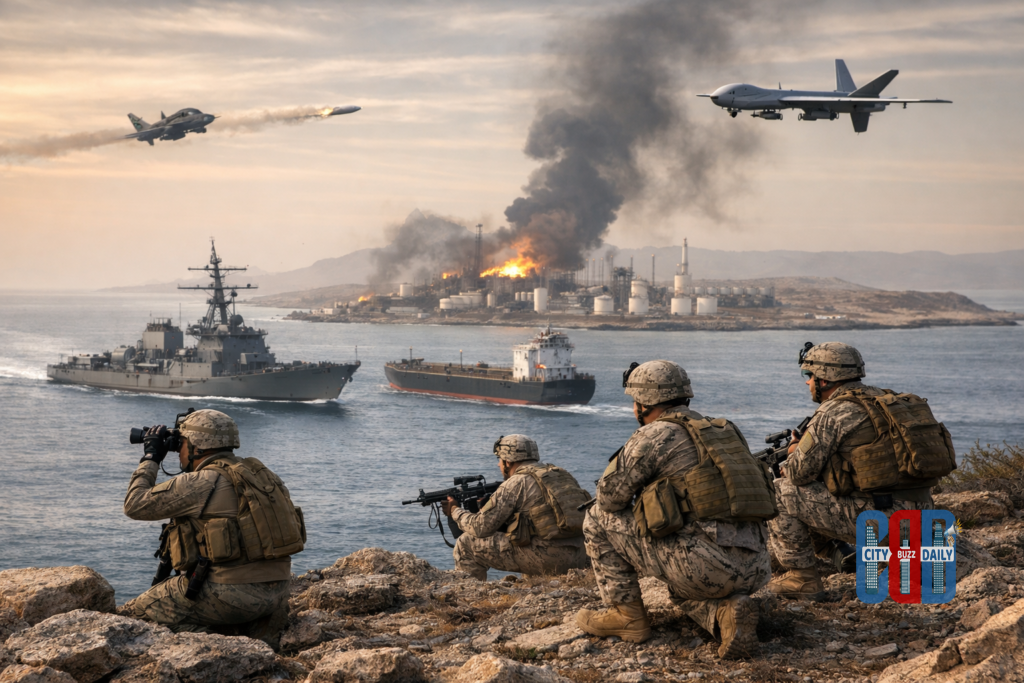
One key option under review involves securing maritime routes through the Strait of Hormuz. The objective would be to ensure safe passage for oil tankers, primarily using air and naval capabilities.

Advertisement
However, some plans could require positioning U.S. troops along Iran’s coastline, which would mark a significant escalation in the scope of operations.
Kharg Island emerges as critical focus
Discussions have also included the possibility of deploying ground forces to Kharg Island, a vital hub responsible for around 90% of Iran’s oil exports.
The U.S. had already conducted strikes on military targets on the island on March 13. While further strikes on oil infrastructure have been threatened, some military assessments suggest that controlling the island may be more strategically viable than destroying it.
Risks and political implications
Officials acknowledged that any deployment of ground troops would involve substantial operational risks. Iran retains the capability to target locations such as Kharg Island using missiles and drones.
There are also domestic political considerations. Expanding the military footprint could face resistance, particularly given earlier commitments to avoid deeper involvement in Middle East conflicts.
Nuclear material security under discussion
Another proposal involves securing Iran’s stockpiles of highly enriched uranium. Sources indicated that while options are being studied, such an operation would be complex and carry significant risks, even for specialised forces.
A White House official stated that no decision has been made on deploying ground troops but confirmed that all options remain under consideration as part of ongoing military objectives.
Ongoing operations and military impact
The U.S. military continues to target Iran’s naval assets, missile systems and defence infrastructure. Since the campaign began on February 28, more than 7,800 strikes have been carried out, with over 120 Iranian vessels reportedly damaged or destroyed.
The United States Central Command, which oversees approximately 50,000 U.S. personnel in the region, is leading operations.
Casualties and evolving strategy
According to official figures, 13 U.S. troops have been killed and around 200 injured during the conflict, though most injuries have been described as minor.
The administration’s stated objectives include neutralising Iran’s missile capabilities, dismantling its naval strength and ensuring it does not develop nuclear weapons.
Despite earlier positions against prolonged military engagement, Trump has not ruled out deploying ground forces. Discussions continue as officials weigh strategic, operational and political factors.