US strikes Iran missile sites near Strait of Hormuz
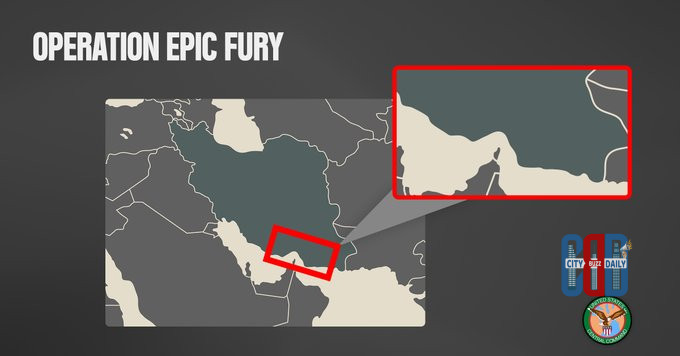
US Central Command conducts bunker-buster strikes on Iran Hormuz missile sites
US targets Iranian coastal missile infrastructure
The United States on Tuesday carried out airstrikes using 5,000-pound “bunker buster” bombs on Iranian missile sites located near the Strait of Hormuz. The operation was confirmed by US Central Command in an official statement.
The military described the weapons as deep penetrator munitions and said the targeted sites housed Iranian anti-ship cruise missiles. According to the US, these missile positions posed a risk to international shipping passing through the strategic waterway.
Strait of Hormuz emerges as key flashpoint
The strikes come amid heightened tensions after Iran moved to shut down the Strait of Hormuz, a critical global oil transit route through which nearly one-fifth of the world’s oil flows.

Advertisement
Iranian Parliament speaker Mohammad Baqer Qalibaf stated that conditions in the strait would not return to their pre-war status. His remarks signal continued uncertainty over maritime movement in the region.
Details of the weapons used
The 5,000-pound bombs used in the operation are designed to penetrate hardened underground targets. Earlier reports have estimated the cost of each such munition at $288,000.
These bombs are smaller in comparison to the 30,000-pound bombs used by the United States against Iranian nuclear facilities last year.
Incident reported near Bushehr nuclear facility
Separately, Iran informed the International Atomic Energy Agency that a projectile struck an area near the Bushehr nuclear power plant on Tuesday evening. Authorities confirmed that there was no damage to the facility and no injuries to staff.
IAEA chief Rafael Grossi reiterated the need for restraint, warning that continued escalation increases the risk of a nuclear-related incident.
Iran escalates strikes across the region
Following the reported killing of senior Iranian leaders, Iran launched fresh missile attacks on Israel and neighbouring Arab countries. Tehran confirmed that Ali Larijani, a key figure in the ongoing conflict, was killed in US-Israel strikes.
Iran’s Fars news agency said Larijani was targeted while at his daughter’s residence in the Pardis district east of Tehran. Israel stated that it had eliminated him in an overnight operation that also killed Gen. Gholam Reza Soleimani, commander of the Basij unit.
Civilian impact and regional response
In retaliation, Iran fired multiple-warhead missiles toward central Israel on Wednesday. Israeli medical services reported two deaths in Ramat Gan, located east of Tel Aviv.
Saudi Arabia, Kuwait, and other Arab nations also faced missile and drone attacks, though several were intercepted by air defence systems.
For more on the escalation, read.
Context of widening conflict
The latest developments underline the expanding scope of the Iran-US conflict, with both military strikes and strategic waterways becoming central to the confrontation.
The situation continues to impact regional stability, global oil supply routes, and broader geopolitical alignments.