US Allows Limited Sale of Russian Oil Stranded at Sea
US Treasury Issues Temporary License Allowing Sale of Russian Oil at Sea
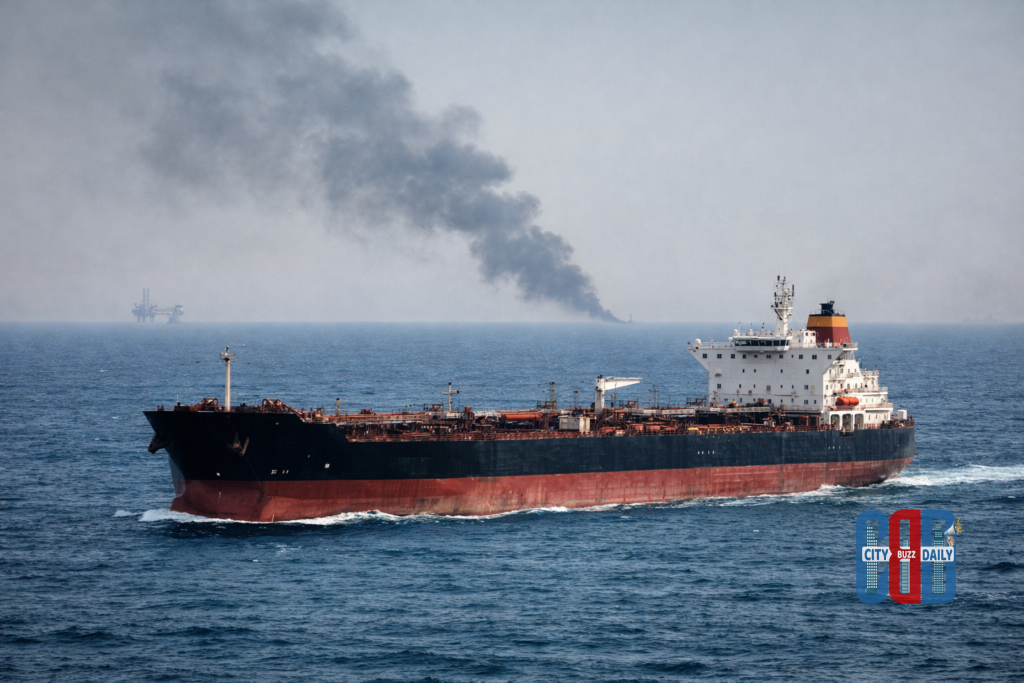
The United States has issued a temporary license allowing countries to purchase Russian oil and petroleum products currently stranded at sea, as Washington attempts to stabilize global energy markets disrupted by the war involving Iran.
The decision was announced by U.S. Treasury Secretary Scott Bessent, who said the 30-day authorization aims to ease supply pressures without delivering significant financial gains to the Russian government.
The measure was announced hours after benchmark oil prices crossed $100 per barrel, reaching their highest level in nearly four years amid escalating tensions in the Middle East.
Temporary Permission for Cargo Already at Sea

Advertisement
According to the license published on the U.S. Treasury Department’s website, the authorization applies only to Russian crude oil and petroleum products that were loaded onto vessels as of March 12.
The permission allows the delivery and sale of those cargoes through midnight Washington time on April 11. The limited window is intended to address shipments that are currently unable to reach buyers due to disruptions in maritime trade.
The U.S. Treasury had earlier issued a similar 30-day waiver on March 5 specifically for India, allowing New Delhi to purchase Russian oil cargo that was already stuck at sea.
Emergency Measures to Stabilise Energy Markets
The temporary license comes as part of a broader set of measures announced by Washington to control rising global energy prices.
Earlier, the U.S. Energy Department said the United States would release 172 million barrels of oil from the strategic petroleum reserve. The step is intended to reduce price pressure triggered by the conflict involving Iran.
The release forms part of a wider coordinated action by the 32-nation International Energy Agency, which collectively plans to release 400 million barrels of oil into global markets.
Strait of Hormuz Disruption Drives Price Surge
Oil market volatility has intensified following military exchanges between the United States, Israel and Iran, which have sharply raised tensions across the region.
The conflict has disrupted shipping routes through the Strait of Hormuz, a critical maritime corridor for global oil and gas transportation.
The disruption has slowed shipping movements and contributed to the sharp rise in international crude prices.
Additional US Measures for Maritime Security
President Donald Trump has also directed the U.S. International Development Finance Corporation to provide political risk insurance and financial guarantees to support maritime trade in the Gulf.
In addition, the United States has indicated that the U.S. Navy could escort vessels operating in the region to ensure the continued movement of energy supplies.
Iran’s Islamic Revolutionary Guard Corps has meanwhile warned that oil shipments from the Gulf could be blocked unless U.S. and Israeli military actions cease.
The developments have added further uncertainty to global energy markets already strained by conflict-related disruptions in supply and shipping routes.