Thackeray Reunion Fails to Deliver in BMC Polls
A Reunion Built on Legacy and Electoral Arithmetic
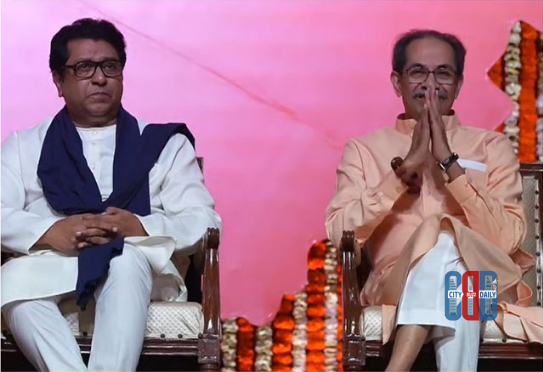
The reunion of cousins Uddhav Thackeray and Raj Thackeray, announced with much fanfare ahead of the Brihanmumbai Municipal Corporation elections, was projected as a turning point in Maharashtra politics. After two decades of separation, the coming together was framed as an effort to consolidate the Marathi vote and reclaim the political legacy of Bal Thackeray.
The political calculation was clear. Control of the BMC, one of Asia’s wealthiest civic bodies, has long been central to the Shiv Sena’s identity and organisational strength. For Uddhav Thackeray’s Shiv Sena (UBT), the election was also about protecting what remained of the party’s traditional stronghold after a series of setbacks.
Background of a High-Stakes Gamble

Advertisement
Uddhav Thackeray entered the civic polls under pressure. His earlier decision to part ways with the Bharatiya Janata Party and align with the Congress and Sharad Pawar’s NCP had already produced mixed political outcomes. That alliance suffered a clear defeat in the 2024 Maharashtra Assembly elections, leaving the BMC contest as a crucial test of relevance and resilience.
The reunion with Raj Thackeray was meant to offset those losses by unifying fractured Marathi votes while also challenging Eknath Shinde’s control over the Shiv Sena name and symbol.
Results That Fell Short of Expectations
The election results, however, underlined the limits of that strategy. The undivided Shiv Sena had secured 84 of 227 wards in the 2017 BMC polls. This time, the Shiv Sena (UBT) was leading in 74 wards, trailing the BJP’s 88. Raj Thackeray’s Maharashtra Navnirman Sena managed leads in only eight wards.
Seat-sharing numbers further exposed the imbalance. Shiv Sena (UBT), contesting 160 seats, recorded a strike rate of over 46 per cent. The MNS, which fought for 53 seats, was left with a success rate of around 15 per cent.
Political Messaging and Its Costs
The alliance also carried political baggage. Raj Thackeray’s aggressive stance on non-Maharashtrians and incidents involving the enforcement of Marathi identity are widely seen as having hurt the combine in mixed-population wards. While some MNS votes may have transferred, the rhetoric appears to have narrowed appeal beyond the core base.
The NCP, despite being part of the alliance, failed to win a single ward. The outcome has revived questions over whether a broader Maha Vikas Aghadi arrangement, involving the Congress, might have produced a different result.