
PPP Model Medical Colleges Decision in Andhra Pradesh
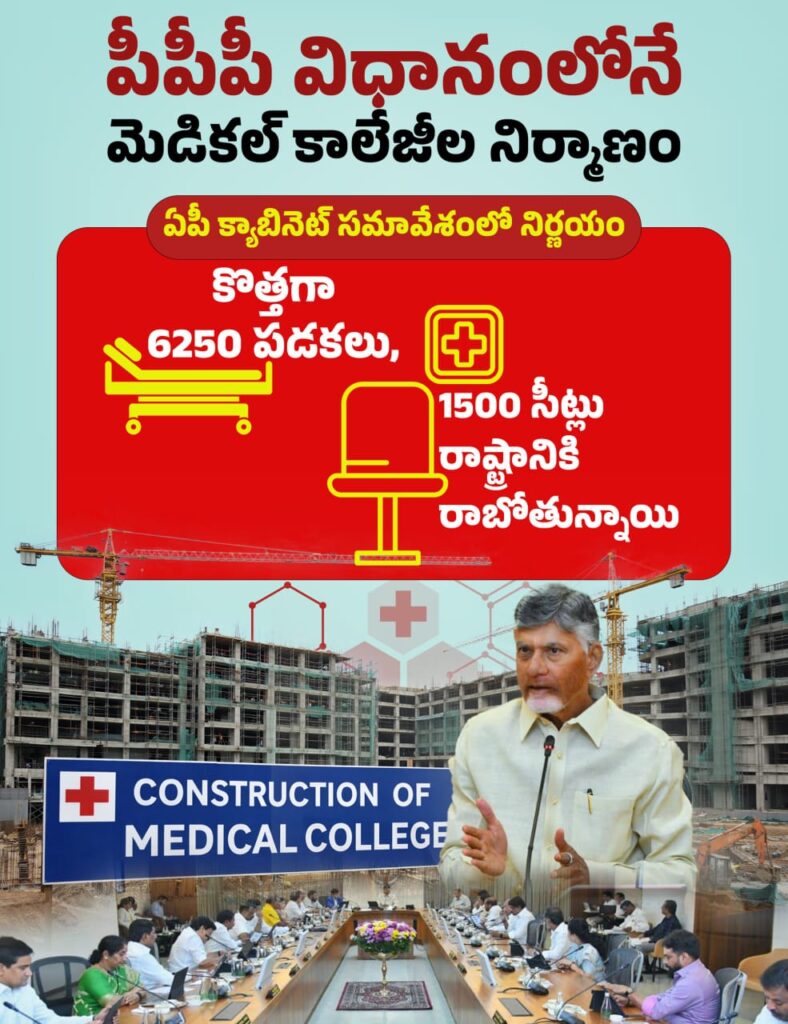
PPP Model Medical Colleges in AP: Cabinet Decision and the Future of Healthcare Education
The Andhra Pradesh state cabinet has taken an important step toward expanding healthcare education by approving medical colleges under the PPP model. The focus of this decision is to develop complete medical institutions with proper infrastructure, skilled faculty, and advanced training systems. Instead of depending entirely on government funding, the public-private partnership system will allow private organizations to invest in the construction and development process, while the government maintains academic control and quality standards. This decision has the potential to change the future of medical education by improving accessibility and reducing financial pressure on the government.
Why Andhra Pradesh Selected the PPP System for Medical Colleges
One of the primary reasons behind this move is the growing demand for healthcare professionals and the shortage of medical seats in the state. Every year, a large number of students compete for limited MBBS seats, forcing many to travel outside the state or even abroad. With the PPP approach, more institutions can be built within a shorter timeline. The cabinet believes that this approach will create faster results, generate more seat availability, and strengthen the healthcare workforce. The PPP system will allow companies to take responsibility for infrastructure and operational support while the government ensures transparency, regulation, and academic standards.
Agreement Process and Tender Extension for Upcoming Colleges
As per the cabinet’s plan, the government will enter into agreements with the organizations that submitted tenders, especially for the Adoni medical college project. Instead of delaying construction, the state has decided to extend tender timelines for other colleges to attract more qualified bidders. Through this procedure, the government expects to finalize multiple partnerships that can begin work within the current administrative year. The cabinet also emphasized that any agreement signed must prioritize quality medical education, transparent management, and proper academic supervision.
Impact on Adoni Medical College and Regional Development
The Adoni medical college project stands as a significant example of how this new model may influence local growth. The institution is expected to use PPP-based infrastructure planning, modern lab equipment, and specialized faculty recruitment. Apart from providing education, it may also include hospital facilities that serve the public. This approach benefits both students and local communities. Students receive a professional learning environment, and citizens gain improved medical services in their region.
How the PPP Model Can Improve Quality of Medical Education

Advertisement
Medical colleges developed under PPP are expected to introduce updated learning systems, research rooms, simulation labs, and digital medical tools. The government intends to monitor every institution regularly to ensure that quality does not decline. If implemented effectively, this approach will reduce the burden on government funds, execute projects faster, and make sure that important regions receive educational and medical support. The cabinet’s decision reflects the intention to create long-term reform rather than short-term expansion.
Future Expectations and Student Opportunities
If the plan continues as scheduled, Andhra Pradesh may experience a noticeable increase in the number of medical seats and professional healthcare opportunities. Students will benefit from additional MBBS seats, internship access in hospitals built under the same campus, and the possibility of advanced specialty departments. The PPP model also helps maintain affordability, as the government will still regulate fee structures and ensure that education does not become entirely commercial.
The Cabinet’s approval of PPP Model Medical Colleges in AP marks a new stage of development. It provides a realistic path to achieve better institutions, advanced facilities, and more learning opportunities. With proper agreements, transparent monitoring, and quality assurance, this approach can become a turning point for the healthcare education system. The PPP model might not just add colleges but reshape the state’s medical education framework to support future generations of doctors, specialists, and healthcare professionals.