Police Surrender Leave Dues Cleared Under Chandrababu Govt
Police Welfare Ignored Under Previous Regime, Critics Say
Fresh political debate has emerged over the treatment of the police force during the previous government’s tenure. Critics allege that while the administration relied heavily on the police for maintaining order and managing political events, it consistently failed to address the welfare and financial rights of personnel.
According to the criticism, police services were frequently used to meet administrative demands, but their contribution was rarely acknowledged in policy decisions. Welfare-related issues, including long-pending dues, were allegedly sidelined, leading to dissatisfaction within sections of the force.
Surrender Leave Payments Left Pending
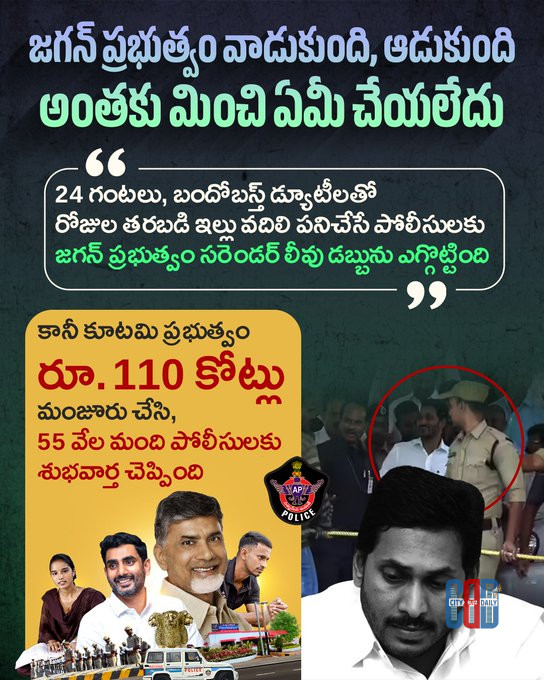
One of the major grievances highlighted is the non-payment of surrender leave encashment to police personnel. This benefit, which forms part of service entitlements, remained unpaid for years, despite repeated representations from police associations.
Critics argue that the issue was not merely financial. The delay in clearing surrender leave payments was seen as a reflection of the government’s approach towards the police force, affecting morale and trust. Even basic assurances, they say, failed to translate into concrete action.
Change in Stand Under the New Government

Advertisement
After the change in administration, Chief Minister N. Chandrababu Naidu publicly acknowledged the role of the police and moved to address the pending issue. The government has sanctioned funds for surrender leave payments, fulfilling a commitment made earlier to police personnel.
Officials indicated that the decision was aimed at restoring confidence among the force and recognizing the additional responsibilities carried by police officers in the line of duty. The move has been projected as part of a broader effort to prioritise police welfare.
Political Contrast Draws Attention
The development has inevitably drawn comparisons with the previous government led by Y. S. Jagan Mohan Reddy. Supporters of the current administration argue that timely recognition of police service and clearing pending dues reflect a more responsive approach to governance.
As the issue continues to be debated politically, attention will now be on whether further steps are taken to address long-standing concerns related to police working conditions and service benefits across the state.