Pentagon plans troop surge to Middle East
Pentagon plans fresh troop deployment amid expanding US military posture
The United States is preparing to deploy thousands of additional soldiers to the Middle East, in a move that signals a continued military buildup despite parallel discussions about a possible agreement with Iran.
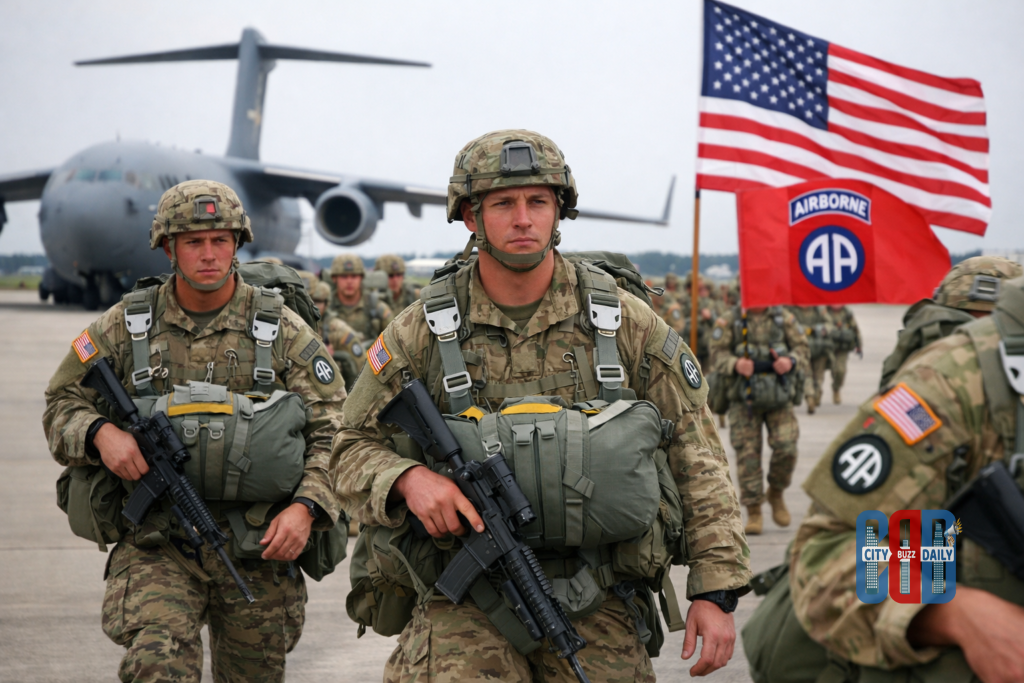
Two individuals familiar with the matter said the Pentagon is likely to send troops from the Army’s 82nd Airborne Division. The unit, based at Fort Bragg in North Carolina, is known for rapid deployment capabilities and specialised airborne operations.
Details of deployment remain undisclosed

Advertisement
Officials did not confirm the exact destination or timeline for the deployment. The U.S. military has directed queries to the White House, which maintained that any formal announcement would be made by the Pentagon.
White House spokesperson Anna Kelly stated that President Donald Trump retains full access to all military options. One of the sources indicated that no final decision has been taken regarding troop deployment inside Iranian territory, but the move would strengthen operational readiness in the region.
The proposed deployment is expected to involve between 3,000 and 4,000 soldiers, according to one of the sources.
Existing military presence and recent reinforcements
The development follows earlier reports of additional U.S. reinforcements being sent to the region. This includes Marines and sailors deployed aboard the USS Boxer, along with a Marine Expeditionary Unit and supporting warships.
Before the latest reinforcements, approximately 50,000 U.S. troops were already stationed across the Middle East. The increased military presence comes amid ongoing hostilities that have entered their fourth week and impacted global markets.
Recent remarks by President Trump suggested “productive” engagement with Iran, leading to a temporary pause in threats targeting Iranian power infrastructure. However, Iranian authorities have denied that any such discussions have taken place.
Escalation risks and operational considerations
The conflict has already seen extensive military action, with the U.S. conducting strikes on 9,000 targets inside Iran since February 28. Casualty figures include 13 U.S. troops killed and 290 wounded. Of those injured, 255 have returned to duty, while 10 remain in serious condition.
Military planners are also examining strategic options, including securing the Strait of Hormuz and potential deployments near Iran’s coastline. Discussions have extended to the possibility of operations around Kharg Island, a key hub handling a significant share of Iran’s oil exports.
The 82nd Airborne Division’s rapid-response capability positions it for immediate deployment if required, including parachute-based operations.
Domestic response and political implications
The potential use of ground forces carries political sensitivity within the United States. Public opinion remains divided, with a Reuters/Ipsos poll indicating that 35% of Americans support U.S. strikes on Iran, while 61% oppose them.
The figures reflect a slight decline in approval compared to the previous week, underscoring continued domestic resistance to deeper military involvement in the region.