Court Steps In on Pawan Kalyan Case
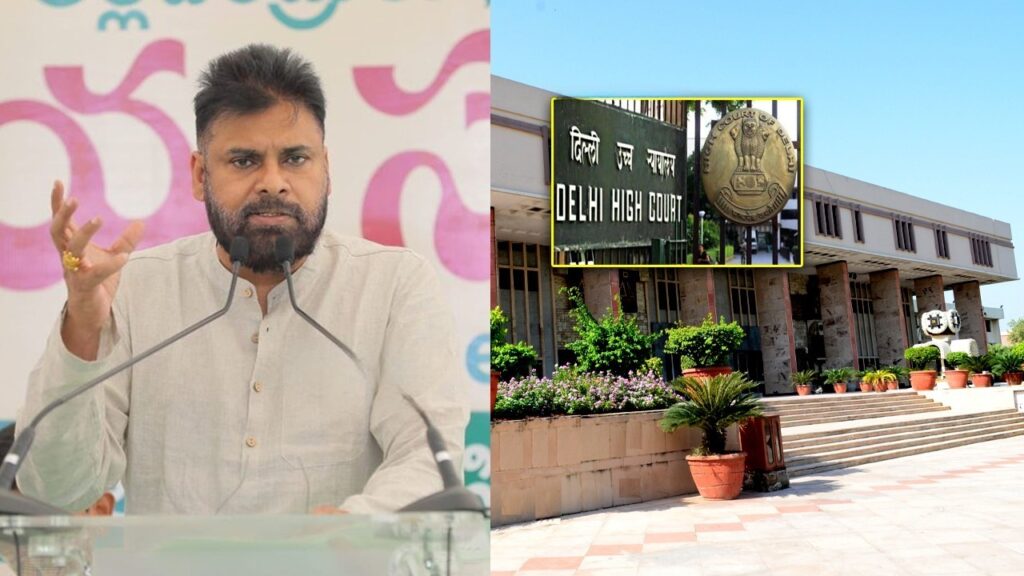
The Pawan Kalyan personality rights case has emerged as a significant legal development in India, highlighting the growing importance of personal identity protection in the digital era. The matter reached the Delhi High Court, where interim relief was granted to prevent the unauthorised exploitation of the Andhra Pradesh Deputy Chief Minister’s name, image, and associated attributes for commercial purposes.
Pawan Kalyan, who is also the president of the Jana Sena Party, approached the court alleging that multiple online platforms were misusing elements of his persona without consent. According to the petition, several websites were engaged in selling merchandise that featured his photographs and likeness, thereby profiting from his public identity without authorisation.
The court examined the issue through the lens of personality rights, a legal concept that safeguards an individual’s control over the commercial use of their identity. Justice Manmeet Pritam Singh Arora, while issuing the interim order, observed that such rights are integral to personal dignity and cannot be diluted in the age of technology-driven exploitation. The restriction imposed by the court will remain effective until May 12, when the matter is scheduled for further hearing.
During the proceedings, the court made it clear that no individual or organisation is permitted to use Kalyan’s name, image, voice, or likeness for commercial advantage without explicit permission. This restriction applies across all forms of technology, including artificial intelligence-based tools, deepfake generation, digital morphing, and voice replication techniques. The judge noted that the unauthorised deployment of such methods, even when carried out online, constitutes a prima facie violation of personality rights.

Advertisement
A notable aspect of the Pawan Kalyan personality rights case is its focus on emerging digital threats. The petition highlighted concerns over AI-generated content that imitates the voice and appearance of public figures. It was argued that such practices not only mislead the public but also cause reputational and financial harm. The court acknowledged these risks, underlining that technological advancement cannot be allowed to override established legal protections.
In addition to addressing commercial websites, the court also turned its attention to fan-run social media accounts. Recognising the difference between admiration and exploitation, the bench issued a balanced directive. Fan pages were instructed to clearly mention disclaimers stating that the accounts are operated by supporters and not by the public figure himself. The court clarified that once such disclosures are prominently displayed in profile descriptions, no further takedown action would be necessary.
This clarification was aimed at preserving freedom of expression while preventing confusion among users. The court’s approach reflects an attempt to draw a clear boundary between genuine fan engagement and misleading representation. Accounts that fail to comply with the disclaimer requirement, however, may face temporary restrictions.
The responsibility for enforcing this directive was placed on Meta, the parent company of Facebook and Instagram. The court instructed Meta to inform users operating fan pages about the interim order. It further directed the company to deactivate non-compliant accounts until the required disclaimers are added. This move places social media intermediaries at the center of ensuring compliance with judicial orders in personality rights matters.
The petition filed by Kalyan also pointed towards the sale of various products such as clothing, accessories, and digital wallpapers featuring his image. These items were allegedly marketed without approval, creating an impression of official association. The court observed that such activities, if left unchecked, could encourage widespread misuse of public identities, particularly in the online marketplace.
Legal experts view the Pawan Kalyan personality rights case as a milestone in defining the scope of identity protection in India. With public figures increasingly becoming targets of digital impersonation, courts are now being called upon to interpret traditional legal principles in modern contexts. This case reinforces the idea that fame does not equate to free commercial usage by third parties.
Another important dimension of the ruling is its emphasis on interim relief. By acting swiftly, the court aimed to prevent further damage while the case remains under consideration. This approach signals judicial awareness of the speed at which digital content can spread and cause irreversible consequences.
The order also sends a strong message to e-commerce platforms and online sellers. It underscores the need for due diligence before using a public figure’s attributes in product listings or promotions. Failure to obtain consent can now attract legal scrutiny, even at an early stage of proceedings.
As the matter moves towards its next hearing date, the outcome is expected to influence how personality rights are enforced across India. The case may also prompt lawmakers and digital platforms to revisit existing policies related to AI-generated content and identity misuse.
In conclusion, the Pawan Kalyan personality rights case reflects the judiciary’s evolving stance on protecting individual identity in an increasingly digital world. By restricting unauthorised commercial use and setting clear guidelines for online platforms, the Delhi High Court has taken a decisive step toward balancing technological innovation with personal rights. The final verdict, once delivered, could shape future legal standards for personality protection in the country.