
Khaki Under Scanner in Nakirekal
Incident That Triggered Public Attention
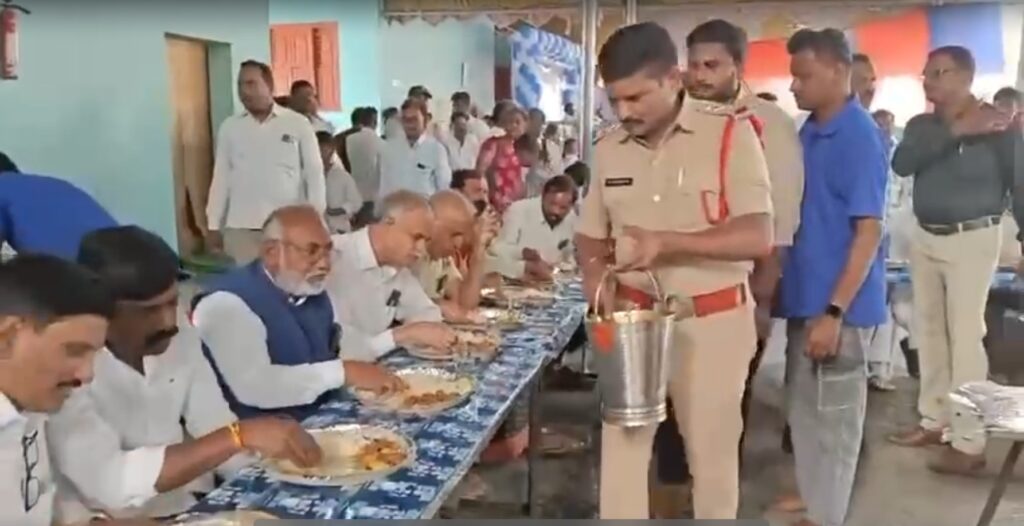
The Nakirekal CI controversy emerged following an event held in Nakirekal that unexpectedly placed the police department under public scrutiny. What began as a routine political gathering soon turned into a widely discussed issue after visuals surfaced showing a Circle Inspector personally serving food to Congress leaders. The incident instantly caught attention because it blurred the line between official police duty and political association, sparking debate across social platforms and public circles.
Police officers are expected to remain neutral and uphold the dignity of their uniform at all times. However, the manner in which the officer participated in the event raised concerns about whether professional boundaries were crossed. As the video spread rapidly online, discussions intensified over the responsibilities and conduct expected from law enforcement officials.
Role of a Police Officer Under Question
The Nakirekal CI controversy has led many to question whether a serving police officer should engage in such activities at political events. While police presence is often required for security arrangements, actively serving meals to political leaders is seen by many as inappropriate. This action has been interpreted by critics as reducing the authority and impartial image of the khaki uniform.
Supporters of strict protocol argue that even symbolic actions matter, especially when they involve officials in positions of power. A police officer’s behavior reflects not only personal judgment but also the discipline of the entire department. This incident has therefore become more than an individual matter, evolving into a discussion about institutional standards.
Political Sensitivity and Public Perception

Advertisement
In politically charged environments, even small gestures can carry significant meaning. The Nakirekal CI controversy highlights how actions taken in public view can influence perceptions of bias. Many citizens believe that visible closeness between law enforcement officers and political figures can weaken public trust.
Public confidence in policing relies heavily on neutrality. When officers appear aligned with a specific political group, doubts naturally arise about fairness in future actions. This incident has fueled concerns about whether political influence is creeping into administrative roles that are meant to remain independent.
Social Media Amplification
Social media played a major role in amplifying the Nakirekal CI controversy. Once the video clips began circulating, reactions poured in from various sections of society. Some users expressed disappointment, while others questioned whether departmental rules were violated. The rapid spread of visuals ensured that the issue reached a wider audience, far beyond the local area.
Online discussions often shape narratives quickly, sometimes even before official statements are released. In this case, the absence of immediate clarification allowed speculation to grow. The situation demonstrates how digital platforms can accelerate scrutiny and demand accountability from public servants.
Debate Over Protocol and Ethics
At the heart of the Nakirekal CI controversy lies the issue of ethics and protocol. Police manuals clearly emphasize discipline, restraint, and political neutrality. While officers may attend events for official duties, engaging in non-essential activities related to political gatherings raises ethical concerns.
Experts in public administration suggest that maintaining a visible distance from political leaders is crucial for preserving institutional credibility. Even if the intention behind the action was courtesy or respect, perception plays a decisive role. For many observers, the optics of the situation overshadowed any benign intent.
Response Expected From Senior Officials
Following the public outcry, attention has turned toward senior police authorities. The Nakirekal CI controversy has prompted calls for an internal review to determine whether departmental guidelines were breached. Citizens and observers are keen to see if higher officials will take corrective steps or issue advisories to prevent similar incidents.
Accountability within the system is essential to maintain discipline. A transparent response from authorities could help restore confidence and set clear expectations for officers across the state. Whether this incident leads to a formal inquiry remains a subject of keen interest.
Impact on Police Image
Incidents like the Nakirekal CI controversy can have lasting effects on the public image of the police force. The khaki uniform symbolizes authority, discipline, and service. Any action perceived as diminishing that image invites criticism and weakens morale within the force.
Many retired officers have expressed concern that such episodes undermine years of effort to build public trust. They stress that professionalism must be upheld not only in law enforcement actions but also in conduct at public events.
Need for Clear Guidelines
The controversy has revived discussions about the need for clearer operational guidelines. While rules exist, consistent reinforcement and training are necessary to ensure officers understand the boundaries of acceptable behavior. The Nakirekal CI controversy could serve as a learning moment for the department.
Clear communication from leadership, combined with regular training, can help prevent misunderstandings and protect officers from unintended missteps. Reinforcing ethical standards benefits both the institution and the public it serves.
Public Expectations From Law Enforcement
Citizens expect law enforcement officers to act with dignity, neutrality, and professionalism. The Nakirekal CI controversy reflects a gap between public expectations and perceived conduct. When such gaps appear, restoring trust becomes a priority.
People rely on police to enforce the law without fear or favor. Any action that casts doubt on this principle invites scrutiny and debate. This incident has therefore resonated strongly with the public.
The Nakirekal CI controversy has become a significant talking point, not merely because of the act itself but due to what it represents. It has reopened discussions about protocol, political neutrality, and the dignity of the khaki uniform. As the matter awaits official response, it stands as a reminder that every public action by a police officer carries weight.
How authorities address this situation may set an example for future conduct. Ensuring transparency and adherence to ethical standards will be crucial in maintaining public confidence and upholding the values associated with law enforcement.