Political War of Words in Telangana
A Fresh Political Storm in Telangana
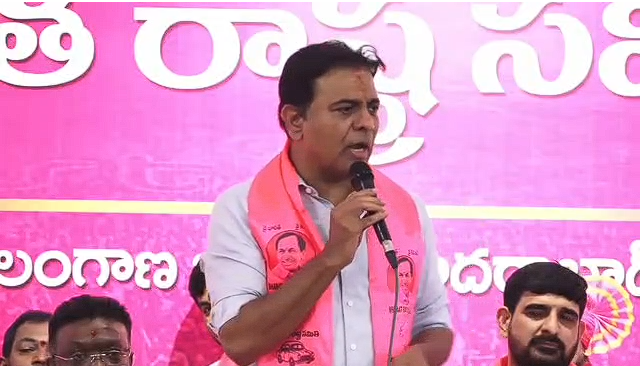
Political debates in Telangana have once again intensified following sharp comments made by K. T. Rama Rao, popularly known as KTR. His remarks, which referenced an earlier statement about Rahul Gandhi, have triggered strong reactions from Congress leaders. What began as a political counter has now grown into a broader discussion on selective outrage and political double standards.
The controversy highlights how political statements, when repeated by different leaders, can receive drastically different responses depending on party lines and timing.
What KTR Actually Said
KTR clarified that his statement was not new or original. He pointed out that the exact words were previously spoken by Revanth Reddy, a senior Congress leader. According to KTR, when Revanth Reddy made the comment earlier, it did not provoke outrage within the Congress party. However, when KTR repeated the same phrase, Congress leaders immediately reacted with anger.
This contrast, KTR argued, exposes a pattern where criticism is tolerated internally but strongly opposed when it comes from political rivals.
Questioning Congress’ Selective Anger

Advertisement
KTR questioned why Congress leaders chose to target him while ignoring similar remarks made by one of their own leaders. He openly challenged Congress members to first address Revanth Reddy’s comments before accusing others. According to KTR, political morality cannot be applied selectively based on convenience.
This argument struck a chord among political observers, as accusations of double standards are not new in Indian politics. The incident has once again raised concerns about consistency in political accountability.
Reference to Sonia Gandhi Remarks
Adding further weight to his argument, KTR recalled another controversial statement allegedly made by Revanth Reddy in the past involving Sonia Gandhi. He stated that Revanth Reddy had once used strong language while referring to Sonia Gandhi, yet no visible disciplinary action or public condemnation followed from the Congress leadership.
By bringing this into the discussion, KTR aimed to show a repeated pattern where internal remarks are overlooked while external criticism is aggressively opposed.
Political Strategy Behind the Statement
Political analysts believe that KTR’s remarks were not merely reactive but strategically framed. By highlighting inconsistencies within the Congress party, he shifted the debate from the content of the comment to the credibility of the critics. This approach allowed him to defend his position while simultaneously placing Congress leaders on the defensive.
Such strategies are common in high-stakes political environments where perception often matters more than factual clarification.
Congress Response and Public Reaction
Congress leaders strongly condemned KTR’s remarks, accusing him of deliberately insulting Rahul Gandhi. Several party members took to social media and press interactions to express their displeasure. However, public reaction remained divided, with some questioning why similar remarks made earlier did not receive the same level of criticism.
On social platforms, many users debated whether the issue was about respect or political convenience. The discussion quickly expanded beyond Telangana, drawing attention from national political commentators.
Impact on Telangana Politics
This episode adds another layer to the already intense political rivalry in Telangana. With elections approaching, such exchanges are likely to increase as parties attempt to mobilize supporters and dominate narratives. KTR’s comments have reinforced his image as a leader unafraid of direct confrontation, while Congress faces renewed scrutiny over internal consistency.
The situation also reflects how political memory plays a crucial role in shaping public opinion. Statements from the past often resurface when they serve present-day political arguments.
Broader Implications for Political Discourse
Beyond party politics, this controversy raises important questions about freedom of expression, accountability, and ethical consistency. When similar statements are judged differently depending on who says them, it undermines public trust in political institutions.
Healthy political debate requires equal standards, regardless of party affiliation. Without that balance, controversies risk becoming tools for distraction rather than meaningful discussion.
KTR’s remarks and the subsequent backlash highlight the fragile nature of political discourse in India. By pointing to earlier statements made by Revanth Reddy, KTR attempted to expose what he views as selective criticism within the Congress party. Whether one agrees with his position or not, the episode underscores the need for consistency and transparency in political reactions.
As the debate continues, it remains to be seen whether Congress will address the internal remarks highlighted by KTR or maintain its focus solely on his statement. Either way, the controversy has ensured that the issue stays firmly in the public eye.