India’s Civilisational Strength Explained
India’s Unique Civilisational Journey
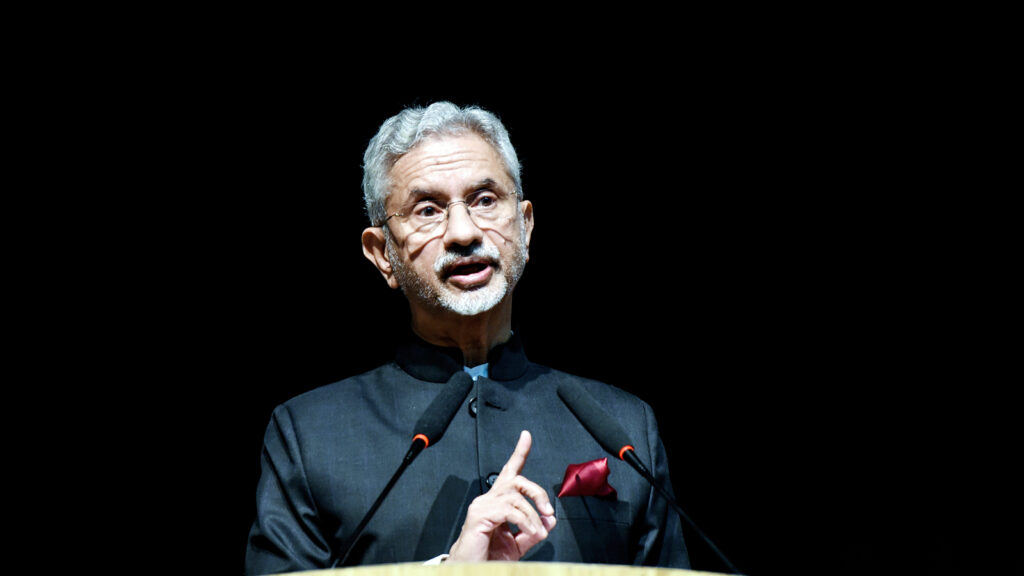
India stands apart from most nations because of its uninterrupted civilisational continuity. Speaking at a major academic and global forum, S. Jaishankar described India as one of the very few ancient civilisations that successfully transformed into a modern nation-state. This transformation, he explained, was not accidental but the result of centuries of adaptation, resilience, and institutional evolution.
Unlike many countries whose modern identities emerged after colonial or revolutionary disruptions, India carried forward its civilisational values into contemporary governance. This continuity has provided the country with a historical depth that shapes its worldview, diplomacy, and internal development. According to Jaishankar, this long journey gives India a unique advantage in navigating global challenges while staying rooted in its cultural foundations.
Democracy as a Global Contribution
One of the strongest pillars of India’s modern identity is its democratic framework. Jaishankar emphasized that India’s decision to adopt democracy after independence had consequences far beyond its borders. At a time when democracy was often viewed as suitable only for a limited set of nations, India demonstrated that democratic governance could thrive in a diverse, populous, and complex society.
By sustaining democracy over decades, India helped establish it as a universal political idea rather than a regional experiment. This achievement reinforced India’s position as a credible voice in global discussions on governance, rights, and political stability. The External Affairs Minister noted that democracy is not merely a system for India but an expression of its civilisational ethos.
India Modern Nation-State and Global Responsibility

Advertisement
The concept of India as a modern nation-state comes with responsibilities. Jaishankar stated that India must actively articulate its values, history, and cultural perspectives on the global stage. This does not mean imposing ideas but engaging through cooperation and mutual respect, particularly with Western nations and emerging global powers.
Such partnerships, he said, are essential in shaping the future international order. India’s growing role in diplomacy reflects its confidence as a nation that balances tradition with modern strategic thinking. The idea of India as a modern nation-state is increasingly visible in its foreign policy choices, multilateral engagements, and global leadership initiatives.
Achieving Impact with Limited Resources
Jaishankar also addressed a practical reality of modern governance. Compared to earlier decades, India operates with relatively constrained resources. This limitation, however, has encouraged smarter strategies focused on achieving maximum global impact. Instead of relying solely on financial or military strength, India leverages its competitiveness, domestic institutions, and international collaborations.
This approach reflects a mature understanding of global influence. India’s strength lies not only in material assets but also in institutional credibility, skilled human capital, and the ability to build long-term partnerships. These factors collectively strengthen India’s position as a modern nation-state with global relevance.
Institutions as Instruments of Foreign Policy
A notable example highlighted during the event was the global expansion of IIT Madras. Jaishankar pointed to the establishment of an overseas campus in Tanzania as evidence of how domestic institutions can serve international objectives. Such initiatives demonstrate that education and knowledge-sharing have become integral to India’s foreign policy.
By exporting academic excellence, India contributes to capacity-building in partner countries while enhancing its global presence. This strategy reflects a shift from traditional diplomacy to a more comprehensive engagement model that blends education, innovation, and development.
Vasudhaiva Kutumbakam and India’s Worldview
Central to India’s global outlook is the ancient idea of Vasudhaiva Kutumbakam, meaning the world is one family. Jaishankar explained that India historically viewed the world not as a battlefield of competing interests but as a shared space where cooperation is possible. This philosophy continues to influence India’s diplomatic conduct.
Rather than isolating itself, India seeks collaborative solutions to global problems. This mindset aligns with its role as a bridge between developed and developing nations, reinforcing the idea of India as a modern nation-state shaped by ancient wisdom.
Human Resource Power Over Natural Wealth
Jaishankar described India as a “human resource power,” contrasting it with nations that rely primarily on natural resources. India’s greatest asset is its people, whose skills, adaptability, and global presence drive the country’s influence. This demographic strength has enabled India to contribute meaningfully across sectors such as technology, healthcare, and education.
The emphasis on human capital reinforces India’s long-term development strategy. It also explains why investment in education, innovation, and skill-building remains central to India’s vision as a modern nation-state.
India’s Role During Global Crises
Highlighting recent history, Jaishankar referred to India’s performance during the COVID-19 pandemic. Despite internal challenges, India emerged as one of the world’s most efficient vaccine producers. By supplying vaccines to multiple countries, India demonstrated its capacity to act responsibly during global crises.
This response strengthened India’s international standing and reinforced trust among partner nations. It also showcased how domestic capabilities can translate into a global public good, further validating India’s evolution as a modern nation-state.
Expanding Global Academic Partnerships
The event also marked significant global collaborations by IIT Madras. Agreements with institutions in Germany, Malaysia, Singapore, the UAE, the UK, and the US highlighted India’s expanding academic and innovation footprint. These partnerships aim to foster research, develop advanced technologies, and support startups across borders.
Such collaborations align with India’s broader strategy of integrating education, industry, and diplomacy. They reflect how institutions are increasingly central to India’s global engagement model.
A Nation Rooted in History, Shaping the Future
In conclusion, Jaishankar’s remarks presented a clear narrative of India’s journey from an ancient civilisational to a confident modern nation-state. This evolution has been guided by democratic values, institutional strength, and a cooperative global outlook. India’s ability to balance historical continuity with modern aspirations positions it uniquely in today’s world.
As India continues to expand its global role, its civilisational depth remains a source of strength rather than constraint. The idea of India as a modern nation-state is not just a political concept but a lived reality shaped by history, people, and purposeful engagement with the world.