Ganta Srinivasa Rao Political Journey and the Ganta Factor
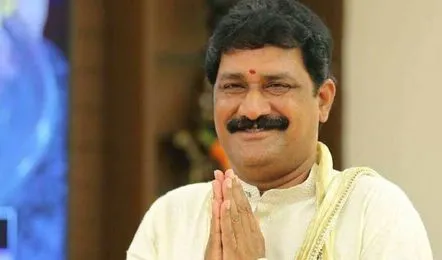
The Ganta Srinivasa Rao political journey stands as one of the most remarkable long-term careers in Andhra Pradesh politics. Spanning more than twenty-five years, his rise has been defined not by dramatic rhetoric or constant confrontation but by consistency, adaptability, and a strong connection with people at the grassroots level. Over the decades, he has built an image that blends administrative experience with political maturity, making his path a reference point for many emerging leaders.
Ganta Srinivasa Rao’s electoral record itself speaks volumes about his stature. He has served once as a Member of Parliament and has been elected as a Member of the Legislative Assembly five times. Irrespective of the constituency or political climate, victory has often followed him. This rare success rate has earned him the reputation of being almost unbeatable at the ballot box. Unlike leaders whose influence fluctuates with political waves, his presence has remained stable across changing governments and alliances.
His administrative exposure expanded further when he served as a minister in the Congress-led government during the undivided Andhra Pradesh era. That phase added depth to his understanding of governance beyond party lines. Later, under the Telugu Desam Party government led by N. Chandrababu Naidu, he handled key ministerial portfolios for five years. These responsibilities strengthened his image as a leader capable of managing crucial departments while maintaining internal party balance.
One of the most distinctive aspects of Ganta Srinivasa Rao’s political journey is his interpersonal approach. He has largely avoided harsh personal criticism, even while responding to opposition attacks. By maintaining cordial relationships across political camps, he earned a reputation as a leader with minimal personal enemies. This ability to remain accessible and balanced has played a significant role in sustaining his relevance for decades, even when political equations shifted.

Advertisement
Despite his stature, the 2024 elections marked a subtle transition in his career. Although he secured victory from Bheemili for the second consecutive time, he did not assume a ministerial role and continued as a regular MLA. Political observers point to regional and social equations as key reasons behind this outcome. Yet, what stands out is his response. Instead of displaying disappointment, he remained active on the ground, reinforcing his connection with local communities.
This renewed engagement became especially visible during the 2026 New Year celebrations. Large numbers of party workers and supporters from Bheemili traveled to Visakhapatnam to personally greet him at his residence. The enthusiasm shown by ordinary citizens reflected more than seasonal goodwill. It revealed the depth of loyalty he has cultivated over the years. Such moments highlighted how closely he has integrated himself into the social fabric of his constituency.
Another significant phase in the Ganta Srinivasa Rao political journey is his forward-looking mindset. During his recent birthday celebrations, he openly expressed thoughts about stepping away from electoral politics after 2029. Rather than an abrupt exit, his approach reflects careful planning. He has begun laying the groundwork for a smooth transition, focusing on legacy rather than prolonged power.
Central to this strategy is his son, Ganta Ravi Teja. Ganta Srinivasa Rao has been actively introducing him to the political landscape by traveling together across villages and towns. From small local gatherings to larger community events, father and son have been seen attending programs side by side. This consistent exposure is aimed at familiarizing people with the next generation while transferring goodwill earned over decades.
Critics have often accused him of limiting personal visits to his constituency after winning elections, relying instead on trusted aides to manage local issues. While this approach worked earlier, the current term reflects a noticeable change. He has chosen to be visibly present, attending events personally and engaging directly with residents. This shift has altered public perception and strengthened his grip over Bheemili.
Through this sustained presence, Bheemili has effectively turned into a political fortress. Party insiders believe that the “Ganta brand” carries enough weight to influence future electoral outcomes, even if he does not contest himself. His individual credibility, combined with the region’s long-standing association with the Telugu Desam Party, has reinforced the constituency’s identity as a stronghold.
The transformation of Bheemili is often described in symbolic terms, with yellow flags prominently marking party dominance. Supporters credit this to Ganta Srinivasa Rao’s administrative style, personal outreach, and long-term vision. His ability to adapt without losing relevance has ensured that his influence extends beyond official positions.
In essence, the Ganta Srinivasa Rao political journey is not merely about electoral wins or ministerial posts. It is a story of endurance, calculated evolution, and legacy-building. As Andhra Pradesh politics continues to evolve, his career offers a lesson in how sustained public trust, strategic restraint, and generational planning can shape long-lasting political relevance.