
Farmers Suffer Under Congress Rule: Reality Behind the Promises
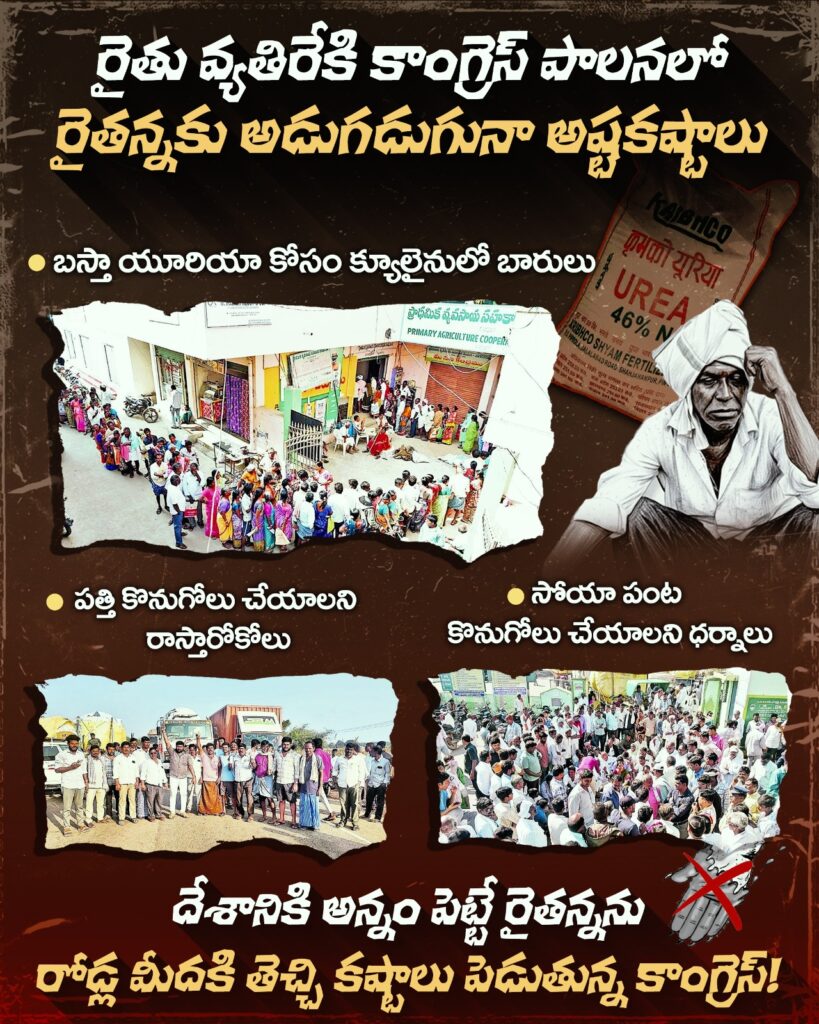
Farmers Suffer Under Congress Rule: Ground Reality
Agriculture stands as the backbone of India, yet the hands that feed the nation continue to suffer. Under Congress’s rule, farmers have repeatedly faced challenges that destabilize their income, livelihood, and dignity. The promises made during elections painted a picture of security, but the reality is very different. Fertilizer shortages, delayed crop purchases, unstable market support, and long protest lines have become a part of daily life. For a farmer who wakes before sunrise and sleeps after a day of struggle, hope seems to be slipping away.
Fertilizer Queues and Broken Systems
One of the biggest problems during Congress governance has been the fertilizer supply crisis. Farmers stand in long lines for hours just to get a single bag of urea. Instead of receiving support, they face humiliation as distributors deny stocks or claim that trucks have not arrived. The government’s response remains slow, and officials keep promising improvement that never reaches the ground. This shortage has directly impacted sowing schedules, forcing farmers to delay planting and suffer lower yields.
Crop Procurement Delays and Farmer Frustration
Procurement centers, which should offer a fair price and timely purchase, have turned into places of harassment. Farmers wait in queues with their produce, only to be told that payment will take weeks or sometimes months. With debts increasing and no money to repay loans, they are pushed to frustration. Instead of protecting farmers from market manipulation, Congress leaders have failed to ensure timely purchase and payment systems. This is where the downfall begins for many small farmers who already operate at the edge of poverty.
Protests, Road Blockades, and Forced Agitation

Advertisement
Farmers do not protest by choice; they protest because they are left with no alternative. Under the Congress rule, protests became frequent because basic demands went unheard. Whether it was soybean, paddy, or cotton procurement, farmers were compelled to block roads and stage sit-ins. These protests were not against development but a cry for dignity. No farmer wants to leave his fields and stand on roads, but when policies hurt more than market fluctuations, agitation becomes unavoidable.
Cotton, Soybean, and Paddy: A Market Without Support
Cotton farmers struggled with price drops as procurement centers refused to buy at the minimum support price. Soybean cultivators faced unpredictable rates, and paddy farmers received delayed payments. The Congress government’s silence during market crashes created fear among farmers who depend entirely on seasonal income. Every crop season became a gamble where farmers risked everything yet received nothing in return. This cycle of uncertainty forced families into continuous debt.
Rising Debt and Decreasing Trust
Banks approach farmers aggressively for repayment, but when farmers approach the government for promises, there is no accountability in return. Loan waivers were used as political bait, but instead of clearing financial burdens, they caused more confusion and selective approvals. Farmers continue to borrow money at high interest from private lenders, sinking deeper into economic struggle. The confidence that once kept them fighting for a better tomorrow now cracks under pressure.
The Declining Faith in Governance
The biggest damage is not financial; it is emotional. The faith that farmers once had in the system is fading. Leadership that promised protection instead delivered disappointment. The backbone of Indian agriculture bends as hope disappears. Farmers need policy, planning, and protection — not speeches and slogans. Until systematic support is rebuilt, agriculture will remain a battlefield for those who simply want to survive.
To regain trust, governance must change. Procurement must be transparent. Market rates must be stabilized. Fertilizer supply must be systematic. Payments must be timely. Without these reforms, the situation will continue to break families who only ask for fair treatment. The role of government is not to watch from a distance but to stand with the farmer who stands for the country.
Congress rule has shown a pattern of neglect that has cost farmers their peace, stability, and earnings. Long queues, delayed payments, and forced protests are not signs of a functioning system but of a broken one. Farmers deserve more than promises — they deserve protection, respect, and results.