Defence Ministry Clears Final Stage of Rafale Jets Deal
Defence Ministry Clears Final Stage for 114 Rafale Fighter Jets Deal
Procurement Moves Toward Approval
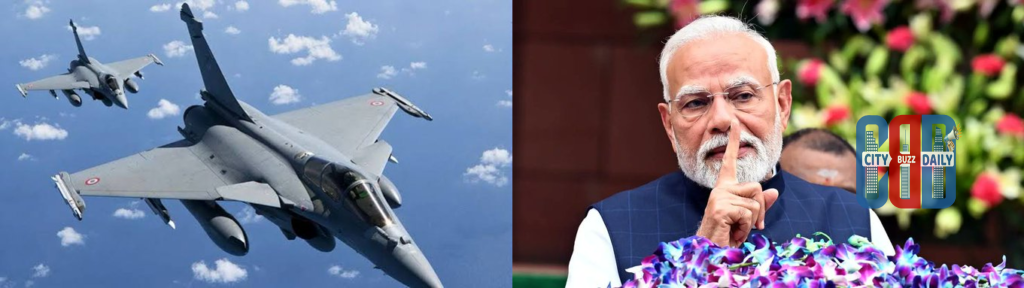
India’s plan to acquire 114 Rafale fighter aircraft from France has entered its final stage, with the Acceptance of Necessity (AoN) expected shortly. The proposed deal, estimated at ₹3.25 lakh crore, is set to become one of the largest defence procurement approvals in the country’s history. The development marks a significant step in strengthening the Indian Air Force’s fighter capability.
The AoN is a critical procedural step in India’s defence acquisition process, enabling formal progression of the procurement proposal. Once cleared, the project will move toward contract finalisation and execution.
Make in India Central to Project Structure
The acquisition framework places strong emphasis on domestic manufacturing under the Make in India initiative. Only 18 aircraft are planned to be purchased in fly-away condition, while the remaining majority will be produced within India. The project aims to achieve up to 60 percent indigenous content, with nearly 80 percent of the fleet expected to be manufactured domestically.

Advertisement
Production will be undertaken in collaboration with French aerospace company Dassault Aviation and Indian private sector partners. The structure is designed to expand domestic aerospace capability and support long-term defence manufacturing capacity within the country.
Configuration Finalised for IAF Requirements
The Indian Air Force has finalised the aircraft configuration for the proposed acquisition. The planned fleet includes 88 single-seater and 26 twin-seater Rafale fighter jets. Most of the aircraft are expected to be produced on Indian production lines, supporting technology transfer and local industrial participation.
The project is expected to contribute to the strengthening of India’s aerospace ecosystem through increased manufacturing activity, skill development, and supply chain expansion.
Addressing Squadron Strength Gap
The proposed acquisition comes at a time when the Indian Air Force operates around 30 fighter squadrons against a sanctioned strength of 42. The shortfall has been a long-standing concern within defence planning. The Rafale deal is intended to help bridge critical capability gaps while supporting modernisation of the air force fleet.
The procurement also aligns with broader strategic planning, as India continues to monitor evolving regional security dynamics involving Pakistan and China. Strengthening air power is viewed as essential for maintaining operational readiness and long-term defence capability.
Strategic and Industrial Impact
Beyond immediate operational needs, the deal is expected to influence India’s defence manufacturing sector and technological base. Domestic production under the programme is anticipated to support industrial growth, enhance technical expertise, and reinforce long-term defence self-reliance objectives.
With the project nearing formal approval, administrative and technical coordination across defence and industrial institutions is expected to intensify. The outcome will shape India’s fighter aircraft capability and domestic aerospace development in the coming years.
👉 For more breaking news updates, in-depth reports, and real-time developments from across India, visit the City Buzz Daily homepage.