
Australian Government Enforces Social Media Ban for Under-16s
First-of-its-kind restriction takes effect
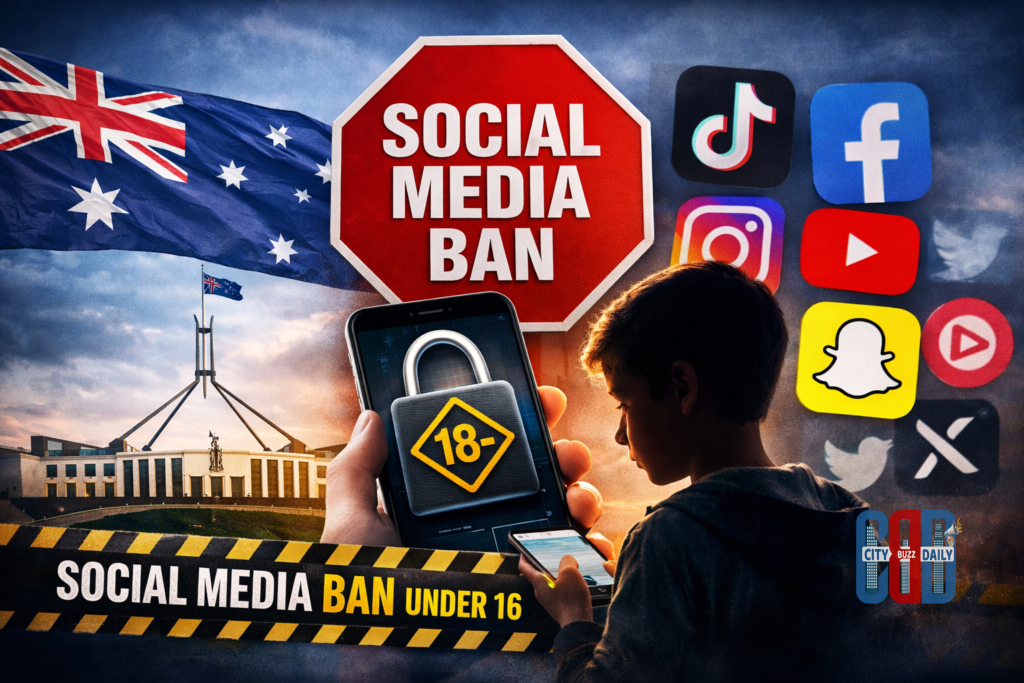
Australia has implemented a nationwide ban preventing children under 16 from using major social media platforms, marking the first such restriction by a democratic government. The measure applies to services including Facebook, Instagram, TikTok, X, Snapchat, YouTube, Reddit, Threads, and streaming platforms Kick and Twitch.
Under the law, minors cannot create new accounts, while existing accounts belonging to under-16 users have been deactivated. Children and parents do not face penalties. Enforcement responsibility rests with social media companies.
Rationale behind the decision
The federal government said the ban targets design features that encourage excessive screen time and expose children to harmful material. A government-commissioned 2025 study found that 96% of children aged 10 to 15 used social media. Seven in ten reported exposure to harmful content, including misogynistic, violent, and self-harm-related material.
The study also found that one in seven children encountered grooming-type behaviour, while more than half experienced cyberbullying. The findings formed the basis for the legislative action.
Platforms covered and exclusions

Advertisement
Ten platforms are currently included under the ban. The government assesses services based on whether their primary purpose is social interaction, whether users can interact with others, and whether content can be posted.
YouTube Kids, Google Classroom, and WhatsApp were excluded as they did not meet these criteria. Online gaming platforms such as Roblox and Discord are also not covered, though critics have questioned their exclusion. In November 2025, Roblox announced age checks for certain features.
Enforcement mechanism and penalties
Companies face fines of up to A$49.5 million for serious or repeated breaches. Firms are required to take “reasonable steps” using multiple age assurance methods. These may include government-issued identification, biometric checks, or age inference technologies.
Self-certification and parental consent alone are not permitted. Meta began closing teen accounts from 4 December last year and said around 550,000 accounts were blocked in the initial days.
Criticism and privacy concerns
Concerns have been raised over the reliability of age verification tools, particularly facial recognition for teenagers. Critics have also questioned whether the fines are sufficient to deter large technology firms.
Data protection has emerged as another issue, given Australia’s history of major data breaches. The government maintains that collected data must only be used for age verification and destroyed afterwards, with strict penalties for misuse.
International context
The Australian move has drawn global attention. Denmark plans a similar ban for under-15s, while Norway and France are considering restrictions. Spain has proposed guardian authorisation for under-16s, and the UK has strengthened enforcement powers against platforms failing to protect minors.
👉 For more breaking news updates, in-depth reports, and real-time developments from across India, visit the City Buzz Daily homepage.