
AP High Court Seeks Counters on Amendment Law Case
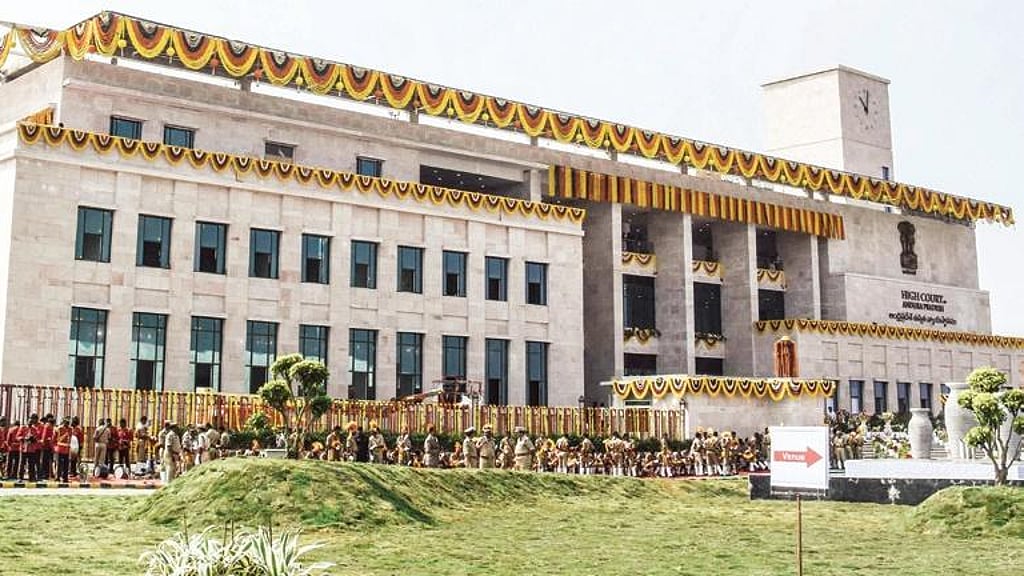
AP High Court Seeks Counters on Amendment Law and GO 225 Case
The Andhra Pradesh High Court has directed key government departments to submit their counters in response to a public interest litigation questioning the legality of GO 225 and the associated amendment law. The petitioner argues that the government’s attempt to regularize unauthorized and illegal constructions contradicts existing statutory provisions. With the case now entering a crucial stage, the court has shifted the responsibility to the concerned authorities to justify the contested decision. The matter has been adjourned for four weeks, providing the departments time to file their explanations.
Background of PIL Challenging GO 225
The PIL was filed by Chinnaboyina Harikrishna from Chandrareddireddypalle, Prakasam district, asserting that the government’s decision to legitimize existing unlawful structures violates the Municipal Administration and Panchayat Raj Acts. According to the petitioner, the amendment law and GO 225 not only weaken planning regulations but also undermine the authority of designated institutions responsible for preventing unauthorized development. The plea urges the court to intervene and restore lawful governance by ensuring strict compliance with established rules rather than permitting exceptions that could incentivize further violations.
Departments Asked to Respond
Notices were issued to the principal secretaries of the municipal administration and urban development, panchayat raj, and general administration departments. Along with them, the Director of Town and Country Planning and various Municipal Commissioners were instructed to provide clarity on why the amendment law and GO 225 were introduced, how the government evaluated its legal standing, and whether adequate safeguards were considered. The High Court expects each department to present detailed counter-affidavits explaining the rationale behind the decision and addressing the allegations raised in the PIL.
Questions Raised on Regularisation Policy
The petitioner claims that the government’s plan to regularize unauthorized and illegal constructions promotes a culture of non-compliance. Instead of penalizing deviations, the policy allegedly encourages individuals to raise buildings without permissions and later legalize them with official support. The PIL argues that such steps weaken urban planning systems, erode administrative accountability, and affect the overall governance structure of municipalities. In rural areas, the situation also creates concerns for Panchayat Raj bodies that already face challenges with unapproved layouts and irregular developments.
Legal Concerns Raised Before the Court

Advertisement
According to the petition, provisions of the Municipal and Panchayat Raj Acts were framed to maintain structural safety, organized growth, and rule-based development. The fear is that regularisation could create a dangerous precedent where rules exist only on paper but have little real-world impact. The plea further suggests that legalizing structures without proper checks could lead to environmental complications, infrastructural strain, and public safety concerns. The petitioner requested the court to insist on enforcement of existing laws instead of introducing corrective steps that bypass established procedures.
Court’s Direction and Adjournment
After examining the details, the Andhra Pradesh High Court decided to seek comprehensive responses from all the departments involved. The bench did not immediately issue a ruling but clarified that only after reviewing the counters will the matter proceed further. The case has been adjourned for four weeks, during which authorities must justify their administrative decision, explain how it aligns with the law, and demonstrate whether procedural requirements were followed before issuing GO 225.
Significance of the Case for Public Administration
This case holds significance beyond the immediate dispute, as it raises substantial questions about governance, urban development policy, and accountability in public administration. A policy decision to regularize illegal constructions could bring short-term relief to property owners, but it may also open the door to more violations in the future. The PIL essentially challenges the balance between practical administration and lawful legislative authority. The court’s eventual decision could determine how similar cases will be dealt with across the state going forward.
With counters now awaited from multiple departments, the next hearing will determine the direction of the litigation. If the authorities manage to justify the amendment law and GO 225 convincingly, the court may allow the government to proceed with its plan. If the explanations fail to satisfy judicial scrutiny, the High Court may consider interventions, modifications, or even suspension of the contentious policy. For now, the matter remains pending, but the developments are expected to draw close attention from affected property owners, civic bodies, and legal experts.