
Iran strikes Tel Aviv with cluster warheads
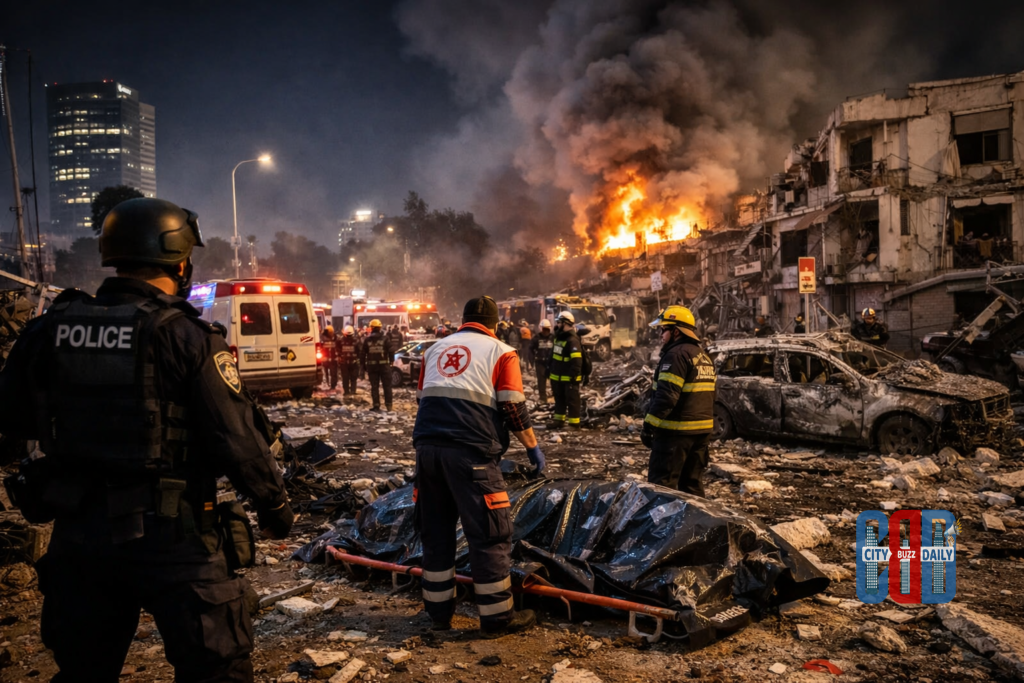
Iran launches cluster warhead strike on Tel Aviv after Larijani killing
Retaliatory strike hits Israeli city
Iran on Wednesday said it carried out a missile strike on Tel Aviv using cluster warheads, describing it as retaliation for the killing of its security chief Ali Larijani. The development was reported by Iranian state television.
The overnight attack on Tuesday killed two people in Tel Aviv. Israeli authorities said the use of cluster warheads, which disperse multiple smaller explosives over a wide area, makes interception difficult. The latest casualties take the total deaths in Israel from the ongoing conflict to at least 14.
Killing of senior Iranian leadership confirmed
Iran confirmed that Ali Larijani, who served as secretary of the Supreme National Security Council, was killed in an Israeli strike. His son and deputy Alireza Bayat were also killed in the same attack on Monday night.

Advertisement
Larijani’s death marks one of the highest-level losses for Iran since the conflict began. Earlier, an Israeli strike had killed Iran’s Supreme Leader Ayatollah Ali Khamenei on the first day of the war.
Nuclear safety concerns raised
Amid the escalating conflict, Iran reported that a projectile struck an area near the Bushehr nuclear power plant on Tuesday evening. Authorities said there was no damage or injury.
International Atomic Energy Agency chief Rafael Grossi renewed calls for maximum restraint, warning that continued hostilities raise the risk of a nuclear accident.
Iran rejects de-escalation proposals
Iran’s new Supreme Leader Mojtaba Khamenei has rejected proposals aimed at reducing tensions or initiating a ceasefire with the United States. According to an Iranian official, he stated that it was not the right time for peace until the United States and Israel accept defeat and provide compensation.
It remains unclear whether Mojtaba Khamenei attended his first foreign policy meeting in person or remotely.
Strait tensions disrupt global trade
The Strait of Hormuz remains largely closed as Iran has threatened to target tankers linked to the United States and Israel. The passage is critical for global oil transport, and disruptions have pushed prices higher.
The United States said it targeted sites along Iran’s coastline to counter anti-ship missile threats. Meanwhile, U.S. President Donald Trump criticised allies for not supporting efforts to secure the strait, stating that their reluctance was a mistake.
European Union foreign policy chief Kaja Kallas said countries were unwilling to risk lives and stressed the need for diplomatic solutions to avoid wider crises in food, energy and fertilizers.
Rising casualties and regional instability
Human rights group HRANA estimated that more than 3,000 people have been killed in Iran since the conflict escalated at the end of February. Iranian strikes have also caused casualties in Iraq, Gulf countries and Israel.
Lebanon has reported over 900 deaths since Israeli attacks began on March 2. Gulf states have faced more than 2,000 missile and drone attacks targeting infrastructure and military facilities, particularly in the United Arab Emirates.
Economic impact and aviation disruption
Oil prices rose about 3% on Tuesday and are up around 45% since the conflict began on February 28. Renewed attacks on oil facilities in the UAE have added to market volatility.
Airlines have warned of sharp increases in jet fuel costs, leading to higher fares and route disruptions. Much of the Middle East airspace remains closed, forcing cancellations and rerouting of flights.






Pingback: US counterterror chief resigns over Iran war stance
Pingback: US strikes Iran missile sites near Strait of Hormuz