US-China Economic Talks Begin in Paris
US, China Officials Hold Paris Talks to Prepare Trump–Xi Summit
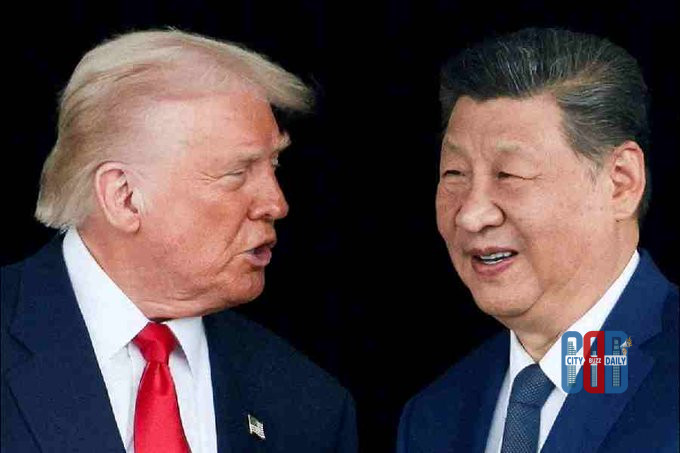
Senior economic officials from the United States and China are meeting in Paris on Sunday to review their ongoing trade truce and prepare the ground for a planned meeting between U.S. President Donald Trump and Chinese President Xi Jinping later this month.
The talks are being led by U.S. Treasury Secretary Scott Bessent and Chinese Vice Premier He Lifeng. U.S. Trade Representative Jamieson Greer is also participating in the discussions.
The meeting is taking place at the Paris headquarters of the Organisation for Economic Cooperation and Development (OECD). China is not a member of the organisation, which consists of 38 mostly developed economies.
Key Trade Issues on the Agenda

Advertisement
Officials from both countries are expected to focus on several unresolved economic issues. These include adjustments to U.S. tariffs, Chinese exports of rare earth minerals and magnets, American restrictions on high-technology exports, and Chinese purchases of U.S. agricultural products.
The discussions continue a series of meetings held in European cities last year. Those talks aimed to stabilise trade ties between the world’s two largest economies after tensions threatened to disrupt bilateral commerce.
Analysts say the main objective of the Paris meeting is to prevent further escalation in economic disputes while maintaining the existing trade framework.
Limited Expectations for Major Breakthrough
Trade analysts say expectations for a major agreement remain low. Preparations for the meeting were shortened due to the ongoing U.S.-Israeli war with Iran, which has drawn significant attention from Washington.
Scott Kennedy, a China economics expert at the Center for Strategic and International Studies in Washington, said both sides appear focused on avoiding renewed tensions rather than achieving a large policy breakthrough.
The upcoming summit between Trump and Xi in Beijing at the end of March is expected to be the next major diplomatic engagement between the two leaders. Additional meetings between the two presidents could also take place later this year, including at a China-hosted APEC summit in November and a U.S.-hosted G20 summit in December.
Impact of Iran Conflict and Oil Markets
The war involving Iran is also expected to feature in the Paris discussions, particularly due to its impact on global energy markets. Oil prices have risen amid concerns about shipping through the Strait of Hormuz.
China receives about 45% of its oil through the strategic waterway. The issue has gained importance following recent attacks on Iran’s Kharg Island oil loading facilities and growing security concerns in the region.
U.S. Treasury Secretary Bessent recently announced a 30-day sanctions waiver allowing the sale of Russian oil stranded at sea in tankers in order to stabilise supply.
Review of Busan Trade Truce Commitments
Officials are also reviewing the commitments made under the October 2025 trade truce announced by Trump and Xi in Busan, South Korea. The agreement reduced some U.S. tariffs on Chinese imports and paused China’s export restrictions on rare earth materials for one year.
China also committed to purchasing 12 million metric tons of U.S. soybeans during the 2025 marketing year and 25 million tons in the 2026 season.
U.S. officials have stated that China has so far met its commitments under the Busan deal, particularly regarding soybean purchases.
New US Trade Investigations
However, new U.S. trade investigations may add tension to the talks. Washington has launched a Section 301 investigation into alleged unfair trade practices related to industrial capacity involving China and 15 other trading partners.
Another probe into alleged forced labour practices in 60 countries, including China, could lead to import restrictions.
China has criticised the investigations and warned it may take countermeasures. Chinese state media have also described the measures as unilateral actions that complicate ongoing negotiations.