Trump Warns More Strikes on Iran Kharg Island
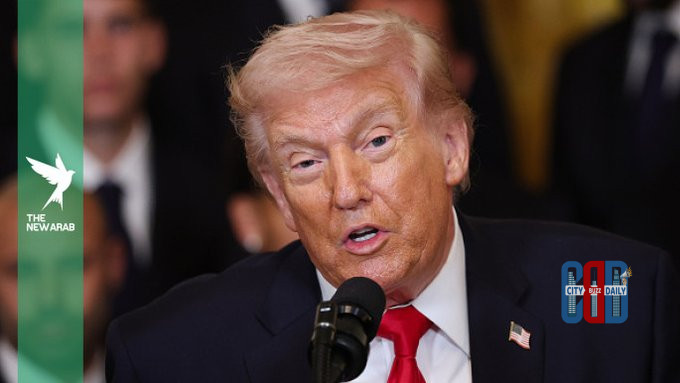
Trump Warns of Further Strikes on Iran’s Kharg Island, Urges Naval Presence in Strait of Hormuz
U.S. President Donald Trump has warned of additional military strikes on Iran’s Kharg Island oil export hub while urging allied nations to deploy warships to secure the Strait of Hormuz, a critical route for global energy supplies. The statement comes as the U.S.-Israeli war with Iran enters its third week and tensions continue to escalate across the region.
Speaking to NBC News on Saturday, Trump said U.S. attacks had “totally demolished” much of the oil infrastructure on Kharg Island. He added that further strikes could follow, saying the United States might hit the facility again.
Escalation in Attacks and Retaliation
The conflict has continued with fresh missile and drone exchanges on Sunday. Iran’s Revolutionary Guards said they launched strikes on targets in Israel and three U.S. bases in the region, describing them as the first phase of retaliation after workers were killed in Iranian industrial areas.

Advertisement
The Israeli military confirmed it was intercepting incoming missiles and drones.
Saudi Arabia’s defence ministry said its forces intercepted and destroyed 10 drones over Riyadh and the eastern region. Iran’s Revolutionary Guards later said they had no connection to that specific drone attack, according to the semi-official Fars news agency.
Meanwhile, a drone attack disrupted operations at a major energy hub in the United Arab Emirates on Saturday. Industry and trade sources said some oil-loading operations were temporarily suspended in Fujairah, one of the world’s largest ship-refuelling hubs.
Strait of Hormuz Security Concerns
Trump has called on major economies to help secure the Strait of Hormuz, through which roughly one-fifth of the world’s oil supply passes. In a social media post on Saturday, he urged countries including China, France, Japan, South Korea, and Britain to send naval forces to protect shipping in the region.
“The countries of the world that receive oil through the Hormuz Strait must take care of that passage, and we will help — a lot,” Trump wrote.
However, there has been no immediate commitment from those countries to deploy warships. Japan’s ruling party policy chief Takayuki Kobayashi told public broadcaster NHK that the legal threshold for such a deployment remains very high under the country’s pacifist constitution.
French officials said Paris is considering assembling a coalition to secure the Strait of Hormuz once the security situation stabilises. British officials also said discussions are underway with allies on measures to protect shipping.
Oil Market Disruption Continues
The conflict has triggered major disruption in global energy markets, with oil prices rising sharply. Analysts say the impact could continue as the war shows no sign of ending soon.
Iran has warned that any attack on its energy infrastructure would draw a response. Iranian Foreign Minister Abbas Araqchi said Tehran would retaliate if its energy facilities were targeted.
Iran’s Supreme Leader Ayatollah Mojtaba Khamenei has also said the Strait of Hormuz should remain closed.
Casualties and Regional Impact
The war launched by Trump and Israeli Prime Minister Benjamin Netanyahu on February 28 has already caused significant casualties. Reports from governments and state media say more than 2,000 people have been killed, most of them in Iran.
At least 15 people were killed on Saturday when an airstrike struck a refrigerator and heater factory in the Iranian city of Isfahan, according to the Fars news agency.
The United States has also issued a warning advising its citizens to leave Iraq as security risks increase across the region.