
Airlines Raise Fares as Jet Fuel Prices Surge
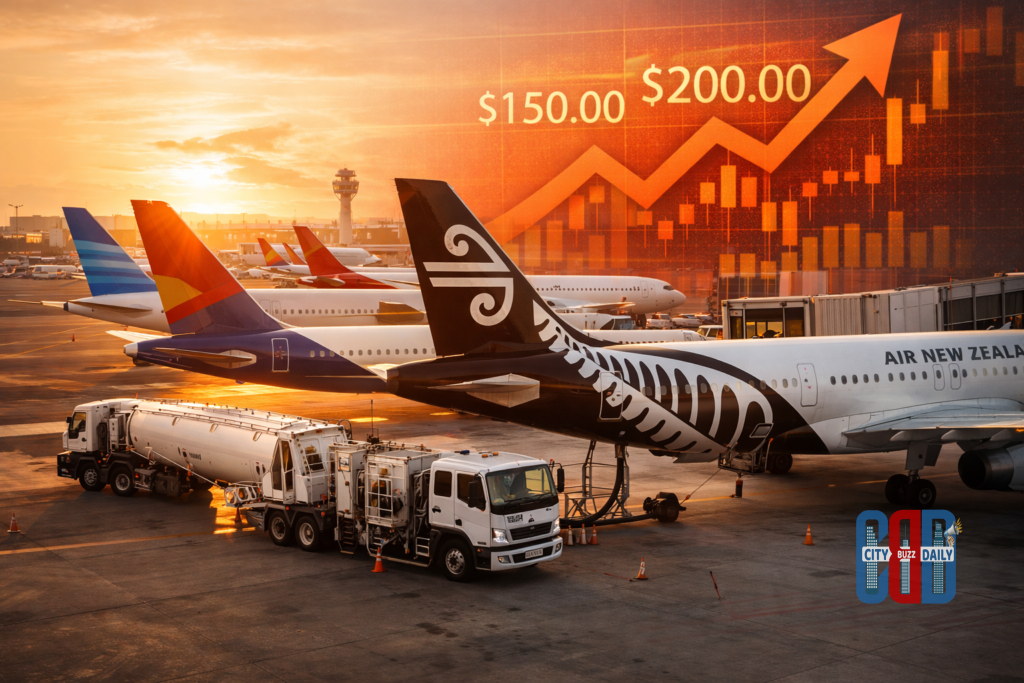
Air New Zealand Raises Fares as Jet Fuel Prices Surge
Air New Zealand has increased ticket prices across its network as global jet fuel costs rise sharply following the Middle East conflict. The airline said the move reflects growing pressure on carriers as oil prices surge and operational uncertainty deepens.
The decision highlights how airlines worldwide are adjusting pricing to manage higher fuel expenses triggered by the U.S.-Israeli war on Iran.
Fuel Price Surge Drives Airline Costs
Jet fuel prices, which stood around $85 to $90 per barrel before the conflict, have climbed rapidly to between $150 and $200 per barrel in recent days.

Advertisement
Air New Zealand said the sharp increase has forced the airline to suspend its financial outlook for 2026 as the industry faces uncertainty about the duration and impact of the conflict.
Fuel remains the second-largest expense for airlines after labour. It typically accounts for around one-fifth to one-quarter of total operating costs.
Ticket Prices Adjusted Across Routes
In response to rising fuel costs, Air New Zealand said it had implemented fare increases across several routes.
One-way economy fares on domestic services have been raised by NZ$10 ($5.92). Short-haul international flights have increased by NZ$20, while long-haul ticket prices have risen by NZ$90.
The airline said further pricing adjustments could be considered if jet fuel costs remain elevated. It may also revise network plans and flight schedules depending on how the conflict evolves.
Other Airlines Seek Cost Relief
Airlines across Asia are also responding to the surge in fuel costs.
Vietnam Airlines has asked local authorities to remove an environmental tax on jet fuel in an effort to maintain operations. The Vietnamese government said airline operating costs in the country have risen between 60% and 70% due to higher fuel prices.
Air New Zealand noted that fuel supplies in New Zealand remain stable for now. The airline said it is monitoring the situation with suppliers and government authorities.
Airline Shares Recover After Oil Pullback
Airline stocks in Asia showed signs of stabilising after a sharp sell-off earlier in the week.
The rebound followed comments from U.S. President Donald Trump on Monday that the war could end soon, which pushed oil prices down to about $90 per barrel on Tuesday from a peak of $119 on Monday.
Air New Zealand shares rose 2%, Korean Air Lines climbed 8%, Qantas Airways gained 1.5% and Cathay Pacific increased more than 4%.
Cathay Pacific already maintains fuel surcharges, including $72.90 each way on flights between Hong Kong and Europe and North America. The airline reviews these charges monthly based primarily on jet fuel price movements.
Travel Industry Faces Broader Impact
Airspace closures and higher fuel costs are also affecting global travel patterns.
Airlines are rerouting flights to avoid conflict zones in the Middle East, reducing capacity on major routes and increasing ticket prices on some services.
According to Cirium, Emirates, Qatar Airways, and Etihad normally carry about one-third of passengers traveling from Europe to Asia and more than half of passengers flying from Europe to Australia, New Zealand, and nearby Pacific islands.
Tourism Operators Adjust Plans
Travel companies have already begun adjusting their operations.
South Korea’s Hana Tour Service said it is cancelling group tours involving flights to the Middle East and waiving cancellation fees for affected customers. All Middle East-related tours scheduled for March have been suspended.
Thailand’s Ministry of Tourism warned that if the conflict continues for more than eight weeks, the country could lose 595,974 tourists and 40.9 billion baht ($1.29 billion) in tourism revenue.