
Global LNG Prices Surge After Qatar Export Halt
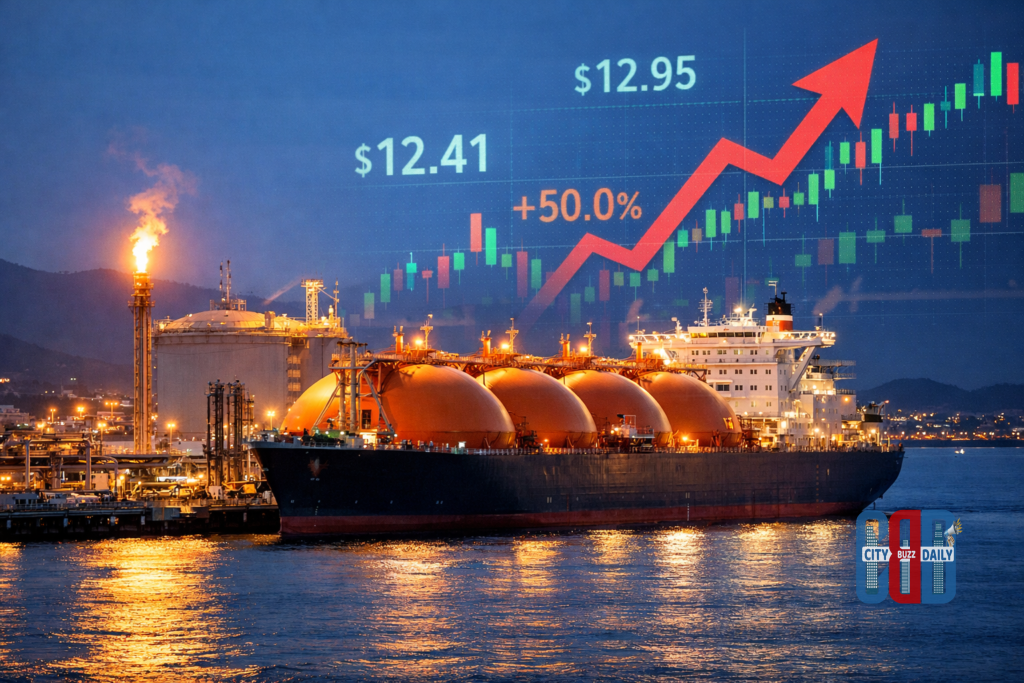
Global LNG Market Reacts to Qatar Export Halt
The sudden halt of liquefied natural gas (LNG) exports from Qatar has triggered sharp volatility in global natural gas markets. Prices across Europe and Asia have surged significantly as buyers scramble to secure alternative supplies.
Qatar was the world’s second-largest LNG exporter in 2025. Its export disruption has quickly tightened supply in key import markets, sending prices roughly 50 percent higher compared to levels seen a year ago.
However, efforts to replace lost cargoes face practical limits. A shortage of LNG carriers and restricted spare liquefaction capacity are reducing the number of shipments that can reach markets immediately.
Global Exporters Shift Cargo Routes

Advertisement
Major LNG exporters outside the Middle East have begun adjusting shipping routes to supply buyers facing shortages. The strong price premiums in Europe and Asia compared with domestic markets are encouraging exporters to divert cargoes where possible.
The United States appears best positioned to benefit from this shift. As the largest global LNG exporter, it likely holds the greatest amount of undeclared capacity available for spot market deliveries.
Other large exporters, including Australia, Russia, Malaysia, and Nigeria, are also expected to review delivery schedules and destinations as prices in Asia and Europe remain elevated.
Gas Prices Climb in Key Markets
Forward LNG contracts for deliveries to Asian markets are currently averaging about $12.95 per million British thermal units (MMBtu) for 2026, according to data from LSEG.
This level represents a 53 percent increase compared with the average price recorded in 2025 and would mark the highest annual average since 2022.
In Europe, benchmark TTF futures for 2026 are averaging around $12.41 per MMBtu. That figure is about 49 percent higher than the average levels seen last year.
While prices may fluctuate further as the market reacts to supply changes, the current snapshot highlights the scale of the price surge and the potential arbitrage opportunities for exporters.
Export Profit Opportunities
U.S. exporters face projected average natural gas costs of roughly $3.63 per MMBtu in 2026, based on LSEG data. Even after accounting for liquefaction and shipping costs, exporters could potentially secure profits exceeding 200 percent by selling to Europe or Asia.
Profit margins for exporters in countries such as Australia and Russia are harder to estimate due to less transparent production and liquefaction cost structures.
Nevertheless, as long as gas prices in Europe and Asia remain near current levels, exporters globally may find strong incentives to redirect shipments to those regions.
Shipping Patterns Under Scrutiny
Market analysts are closely monitoring LNG shipping routes for signs of sudden cargo diversions.
In 2025, around 68 percent of U.S. LNG exports were shipped to Europe. The region is expected to remain a priority because shipping costs are relatively lower than deliveries to Asia.
At the same time, shipments from the United States to Asia have increased. Loading schedules indicate that exports to Asian buyers rose by nearly 20 percent in the first three months of the year compared with the same period in 2025.
Asia-bound LNG from the United States during the first quarter of 2026 is estimated at 3.75 million metric tons, up from 3.16 million tons during the same months last year.
Exports to Europe between January and March are estimated at 22.7 million tons, compared with 19.8 million tons during the same period in 2025.
Limited Flexibility for Australian Suppliers
Australian LNG shipments remain overwhelmingly focused on Asian markets. Asia accounted for more than 95 percent of Australia’s exports last year.
Shorter shipping routes to countries such as China and Japan provide Australian suppliers with a cost advantage in the region. Long-standing commercial relationships with buyers also strengthen those trade flows.
However, most Australian LNG volumes are already tied to long-term contracts. This leaves limited flexibility to redirect cargoes to spot markets where buyers are currently willing to pay higher prices.
As a result, exporters including Russia, Malaysia, and Nigeria may find opportunities to expand their presence in global LNG trade routes if supply disruptions continue.