Health Experts Recommend Seeds for Cholesterol Control
Health Experts Highlight Seeds That Support Cholesterol Management
Rising cholesterol levels remain a key indicator linked to heart health, with diet playing a central role in regulating lipid balance. Nutrition guidance continues to emphasise natural food sources that support cardiovascular function, including certain seeds known for their fibre, healthy fats, and plant compounds.
Health experts note that some seeds, when consumed correctly and regularly, may assist in lowering low-density lipoprotein (LDL) cholesterol and improving overall lipid profile.
Flaxseeds and Sesame Seeds in the Daily Diet

Advertisement
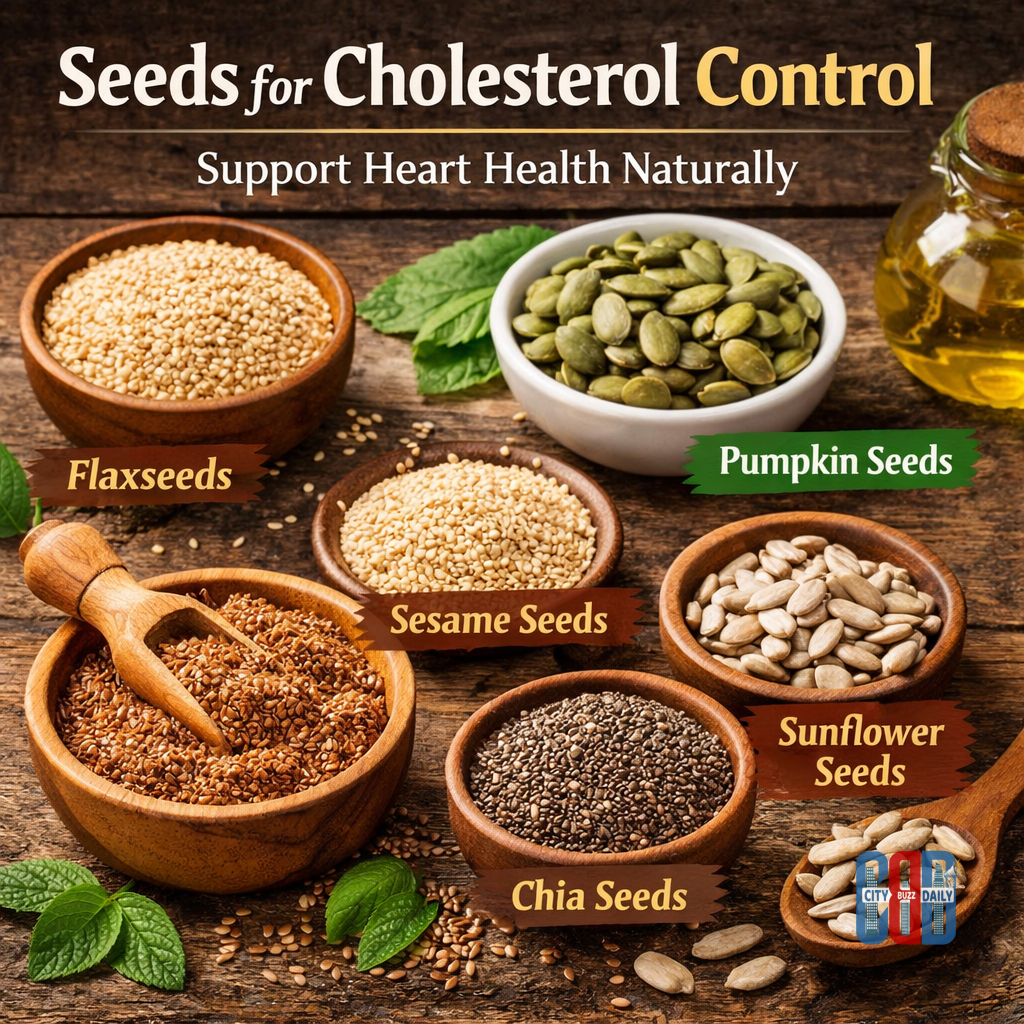
Flaxseeds are recognised as a rich source of plant-based omega-3 fatty acids and soluble fibre. The fibre content helps absorb cholesterol in the digestive system, aiding its removal from the body. Ground flaxseeds are generally preferred for better absorption and can be mixed with yogurt, oatmeal, or smoothies.
Sesame seeds, widely used in Asian and Middle Eastern diets, contain lignans, antioxidants, and plant sterols. These compounds help regulate cholesterol levels while also supporting blood pressure balance and reducing inflammation. Sesame can be consumed in various forms, including as paste made from ground seeds.
Pumpkin and Chia Seeds for Heart Support
Pumpkin seeds provide magnesium, a mineral important for heart function and blood pressure regulation. They also contain protein, fibre, and antioxidants, which contribute to maintaining a healthy cholesterol balance. Roasted pumpkin seeds can be eaten as a snack or added to mixed foods.
Chia seeds are known for their high fibre content and plant-based omega-3 fatty acids. Their fibre helps slow digestion and cholesterol absorption. When soaked, chia seeds form a gel-like texture, making them suitable for mixing into beverages, cereals, or puddings.
Sunflower Seeds and Balanced Nutrition
Sunflower seeds contain phytosterols, plant compounds that help limit cholesterol absorption in the body. They are also a source of vitamin E, an antioxidant that supports vascular health. Unsalted sunflower seeds can be consumed as a snack or added to prepared dishes.
Nutrition experts stress that incorporating these seeds into a balanced diet, alongside fruits, vegetables, and whole grains, may support long-term cardiovascular health and cholesterol management.