UPA-Era Phone Tapping Returns to Spotlight Amid Current Political Row
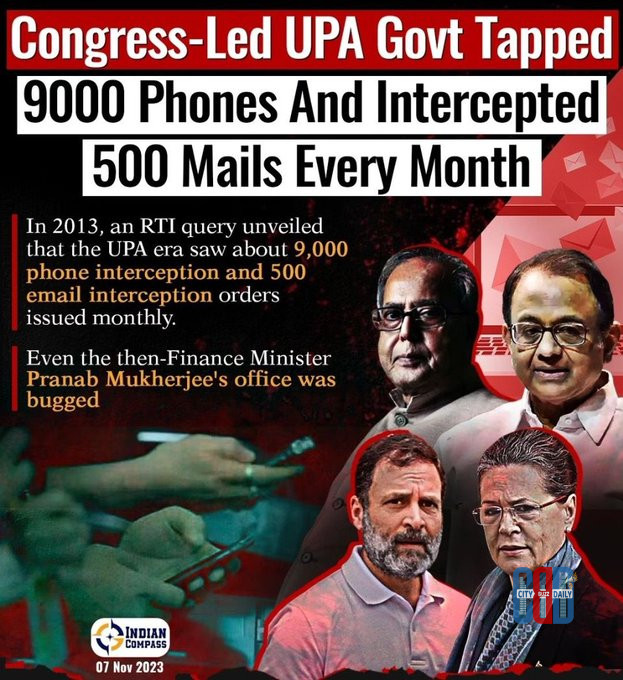
Old Surveillance Claims Resurface During Ongoing Debate
The political debate over phone tapping has resurfaced with renewed intensity, as past allegations from the United Progressive Alliance (UPA) period are being cited amid the current controversy in Telangana. Social media posts and archived reports are reviving claims that large-scale surveillance was routine during the UPA’s second term at the Centre.
The renewed focus comes at a time when the Telangana government has constituted a Special Investigation Team (SIT) to examine alleged phone tapping during the previous BRS administration. Senior BRS leaders, including K T Rama Rao, have been questioned by the SIT in Hyderabad.
Outlook Report From 2010 Recalled
An English weekly magazine, Outlook, published a report on May 3, 2010, alleging that phones of several senior political leaders and prominent industrialists were tapped during the UPA-II tenure. The report named leaders cutting across party lines, including Nitish Kumar, Sharad Pawar, Digvijaya Singh, and CPI(M) leader Prakash Karat, along with then Tata Group chairman Ratan Tata.
At the time, the Union government did not issue a categorical denial when queried by the media, leading to sustained political criticism and debate that continued for nearly two years.
RTI Disclosures on Scale of Surveillance

Advertisement
Further details emerged through applications filed under the Right to Information Act. On August 6, 2013, an RTI query to the Union Home Ministry revealed that between 7,500 and 9,000 phone lines were being intercepted every month, along with the monitoring of 300 to 500 emails.
In a separate RTI reply dated December 24, 2013, the Home Ministry disclosed that as many as nine law enforcement and intelligence agencies were authorised to conduct phone interception. These included the Intelligence Bureau, the Directorate of Enforcement, and the Central Board of Direct Taxes.
Ratan Tata’s Legal Challenge
Ratan Tata had publicly objected to the interception of his conversations in connection with the Niira Radia case. In 2013, he stated that nearly 5,000 hours of his calls were monitored, describing the action as a violation of personal privacy. He subsequently approached the Supreme Court challenging the legality of the surveillance.
Civil liberties activists and legal experts had criticised the scale of interception during that period. However, the issue gradually receded from public attention after the change of government at the Centre in 2014.
Political Implications Today
With phone tapping once again dominating political discourse, critics point to the contrast between current assertions and the disclosures from the UPA era. The debate continues to shape the broader discussion on surveillance, accountability, and privacy in public life.
For context on the ongoing investigation in Telangana, see the report on the SIT questioning of KTR in the phone tapping probe.
👉 For more breaking news updates, in-depth reports, and real-time developments from across India, visit the City Buzz Daily homepage.