Sheikh Hasina Speaks on Modi, Minorities and Bangladesh Polls
Sheikh Hasina Addresses Political Allegations, India Ties and Democratic Concerns
Former Bangladesh prime minister Sheikh Hasina has delivered a strong response to recent political accusations while outlining her concerns about Bangladesh’s democratic direction, minority safety, and regional relations. Speaking in an exclusive interaction, Hasina dismissed claims linking her or the Awami League to the death of opposition leader Khaleda Zia, describing such allegations as misleading and harmful to national unity.
She stressed that moments of national loss should encourage reflection and dignity rather than political confrontation. According to her, exploiting a death for partisan narratives weakens trust in democratic discourse and distracts from pressing issues facing the country.
Rejecting Claims Over Khaleda Zia’s Death
Khaleda Zia, a three-time prime minister and long-time leader of the Bangladesh Nationalist Party, passed away on December 30 after battling prolonged illness. While acknowledging their decades-long rivalry, Hasina described Zia’s death as a significant moment in Bangladesh’s political history and extended condolences to her family and supporters.
Hasina firmly rejected allegations that her government was responsible for the deterioration of Zia’s health. She stated that such claims ignored documented medical arrangements and were designed to inflame public sentiment. According to Hasina, replacing evidence with accusations risks deepening divisions at a time when the nation requires stability.
Medical Care and Humanitarian Responsibility

Advertisement
Addressing criticism from BNP leaders, Hasina highlighted that Zia was provided extensive medical care during her illness. She noted that the government allowed access to advanced treatment, specialist doctors, and top hospitals, including consultations involving foreign medical experts. Rather than remaining in a prison facility, Zia was kept under supervised care at home, which Hasina described as a humanitarian decision despite political hostility.
Former Awami League ministers have echoed this position, arguing that the state acted within both legal and ethical boundaries. Hasina maintained that politicising health issues undermines serious debate about governance and accountability.
Acknowledging India’s Support and Regional Partnership
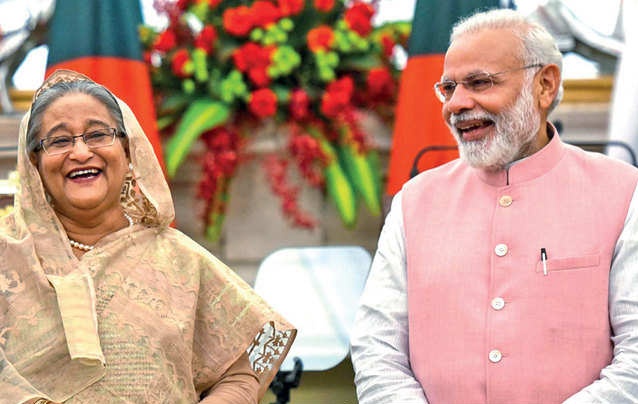
Hasina also spoke about Bangladesh’s relationship with India, describing it as a vital partnership rooted in shared history and regional cooperation. She expressed gratitude toward Narendra Modi and the Indian people for their consistent support during challenging periods.
She stated that India’s emphasis on democratic values, minority protection, and regional stability was justified. According to Hasina, a peaceful and democratic Bangladesh benefits not only its citizens but also contributes to broader South Asian stability. She added that cooperation between the two nations should continue to focus on security, economic growth, and cultural ties.
Concerns Over Minority Safety in Bangladesh
One of Hasina’s strongest warnings focused on rising attacks against religious minorities. She accused the interim administration led by Muhammad Yunus of failing to control extremist elements. According to her, violence targeting Hindus, Buddhists, Christians, and other minority communities has increased due to weak governance and political appeasement.
Hasina argued that protecting minority rights is a constitutional obligation and a moral responsibility of the state. She warned that allowing extremist forces to operate freely damages Bangladesh’s international image and threatens social harmony built over decades.
Criticism of the Interim Government
Hasina accused the current interim setup of lacking the authority and commitment required to maintain law and order. She claimed that selective enforcement of rules and tolerance of radical groups had created fear among vulnerable communities. In her view, silence or inaction from authorities sends a dangerous signal that undermines confidence in the rule of law.
She emphasized that governance should not be driven by short-term political calculations but by long-term national interest, especially when communal harmony is at stake.
Election Integrity and Democratic тревerns
As Bangladesh approaches its February 12 elections, Hasina raised serious concerns about the electoral environment. She alleged widespread intimidation, restrictions on dissent, and shrinking space for independent media. According to her, banning the Awami League and limiting opposition participation undermines the credibility of the democratic process.
Hasina warned that democracy cannot survive without inclusion, transparency, and freedom of expression. She argued that excluding major political forces risks creating long-term instability and deepening political polarization across the country.
Warning Against Political Polarisation
Hasina stressed that Bangladesh’s future depends on dialogue rather than division. She cautioned that governing through fear and exclusion would erode public trust and weaken democratic institutions. According to her, sustainable progress requires fair competition, respect for opposing views, and a commitment to constitutional principles.
She also highlighted the role of international observers and regional partners in encouraging free and fair elections, stating that global confidence in Bangladesh depends on transparent democratic practices.
A Call for Stability and Democratic Values
Concluding her remarks, Hasina reiterated her call for dignity, accountability, and unity. She urged political actors to avoid inflammatory rhetoric and focus on protecting citizens, safeguarding minorities, and preserving democratic norms. According to her, Bangladesh stands at a critical crossroads where choices made today will shape its political and social future for years to come.
She maintained that democracy thrives not through exclusion but through participation, responsibility, and respect for the rule of law.